The Skeleton Painter
object number:
3112
measurements:
37,3 × 45,3 cm
date:
1896 - 1896
object number:
3112
measurements:
37,3 × 45,3 cm
date:
1896 - 1896

Always receive the latest news.
1Anthea Callen, The Work of Art, Plein-Air Painting and Artistic Identity in Nineteenth-century France, (London, Reaktion Books Ltd, 2015), 89.
2Anthea Callen, The Work of Art, Plein-Air Painting and Artistic Identity in Nineteenth-century France, (London, Reaktion Books Ltd, 2015), 89.
3Leslie Carlyle, The Artist’s Assistant oil painting instruction manuals and handbooks in Britain, 1800-1900, with reference to selected eighteenth-century sources, (London: Archetype Publications, 2002)
1 Chicago: KMSKA. Online Scholarly Catalogue: Research The Skeleton Painter.
Last modified November 24, 2025, https://kmska.be/en/osc/he-skeleton-painter.
2 Chicago: KMSKA. Research: The Skeleton Painter.
Online Scholarly Catalogue, last modified November 24, 2025, https://kmska.be/en/osc/he-skeleton-painter.
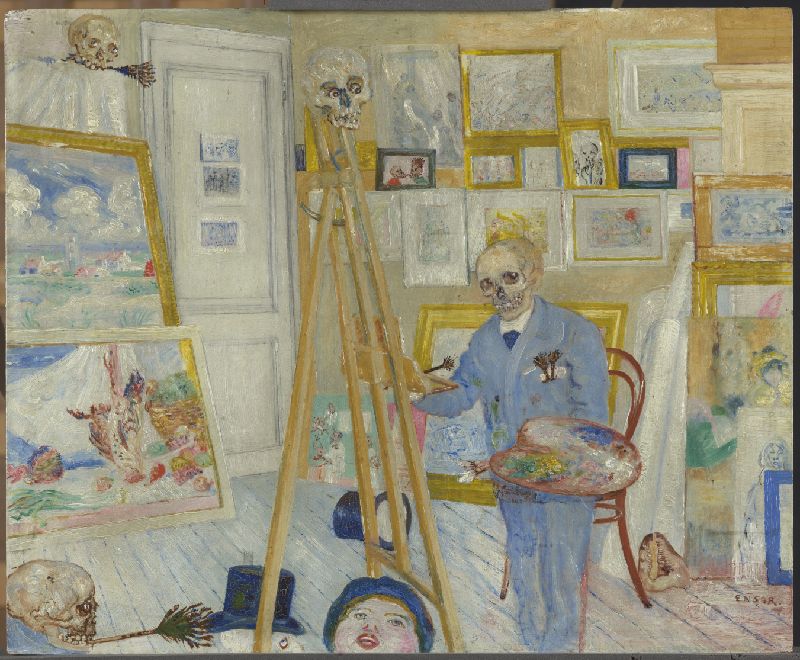
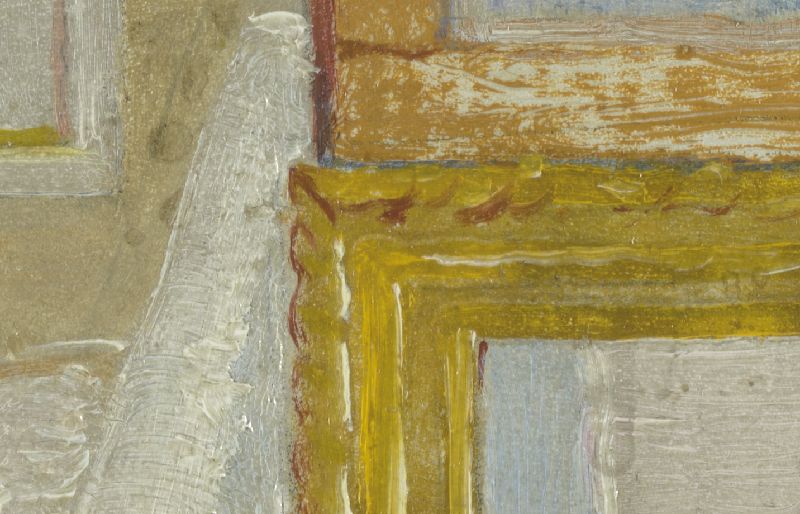
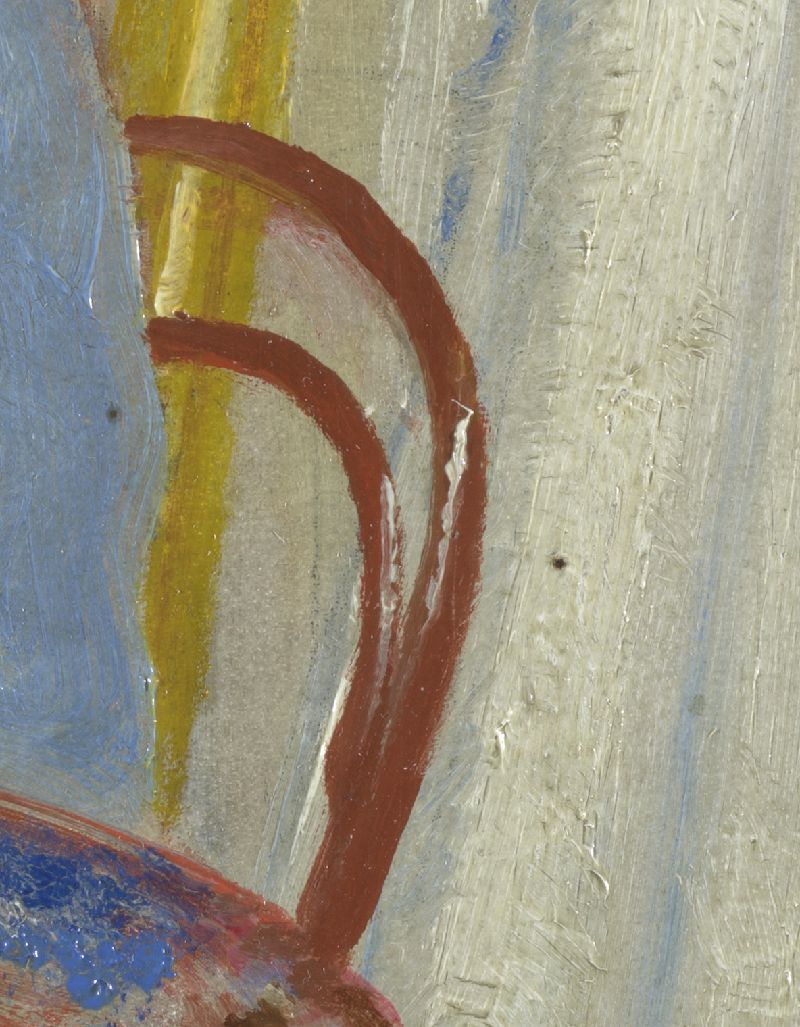
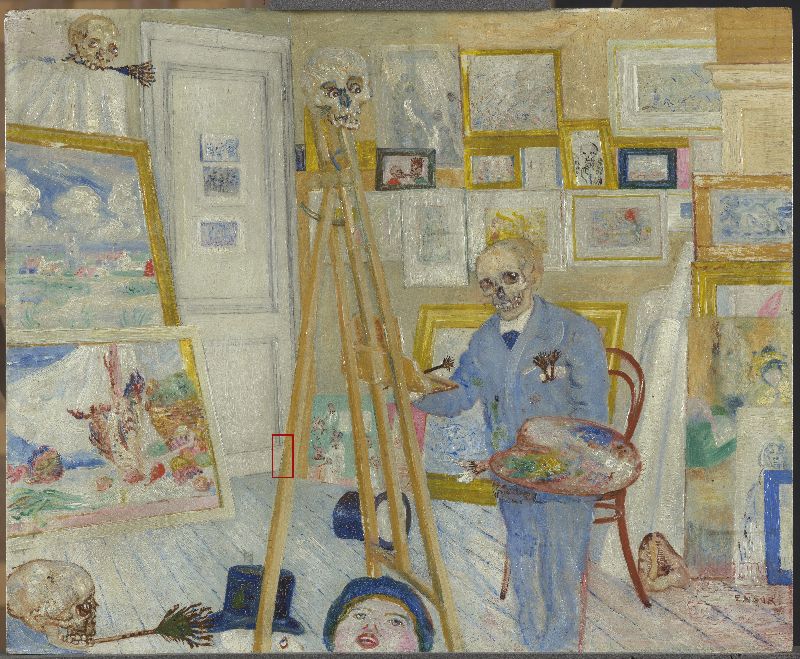
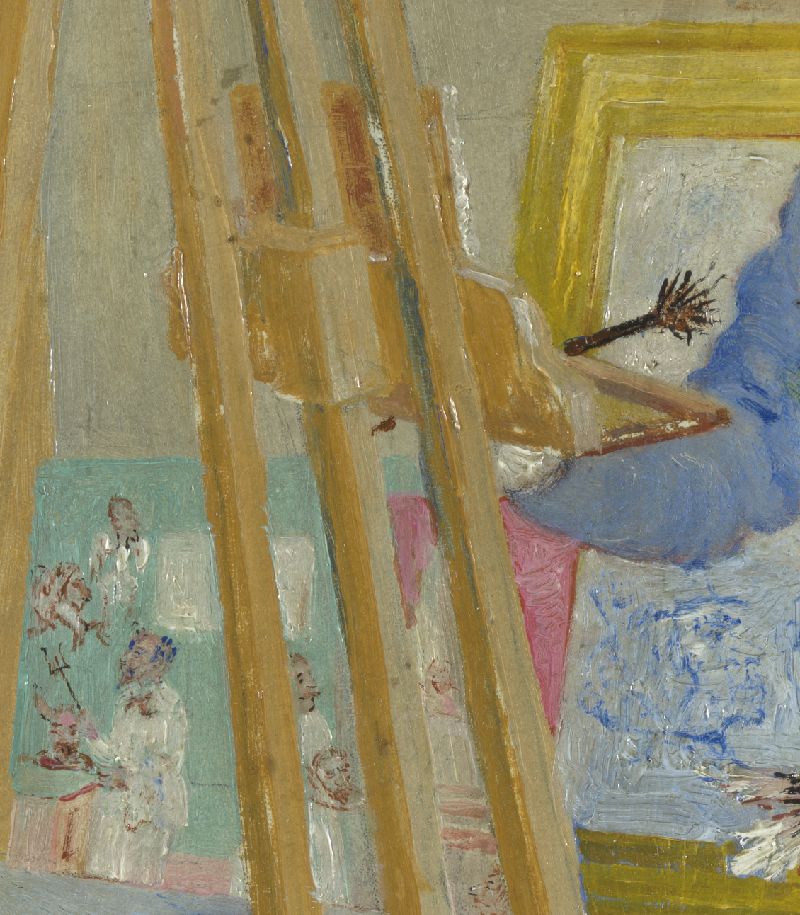
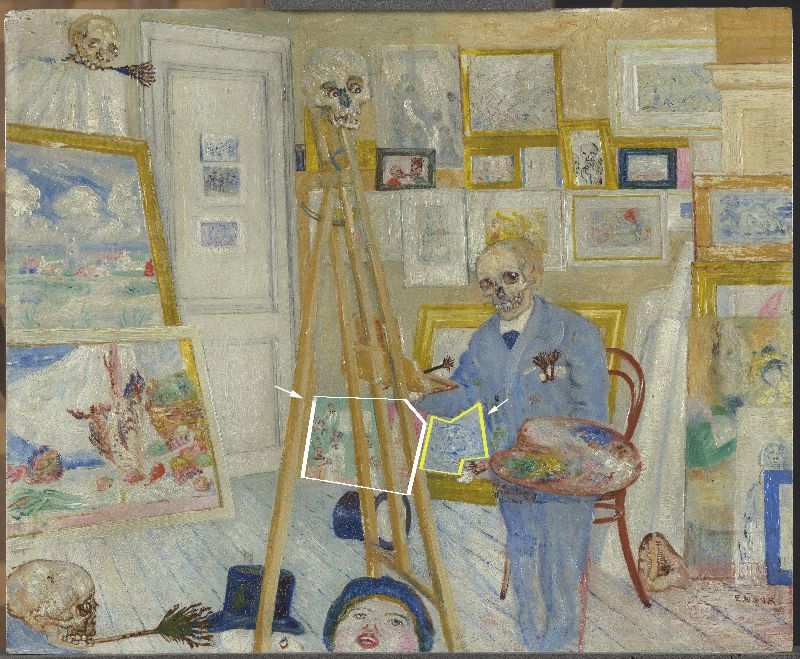
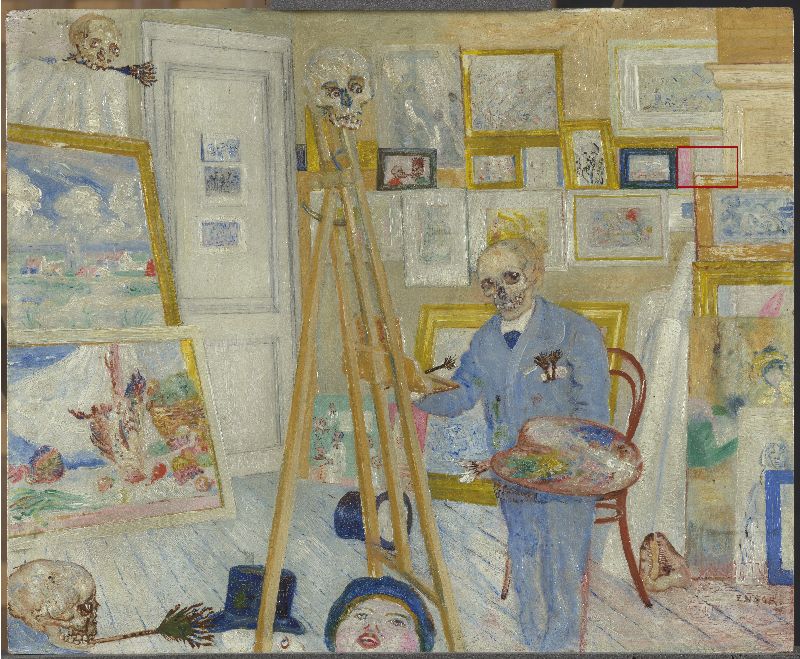
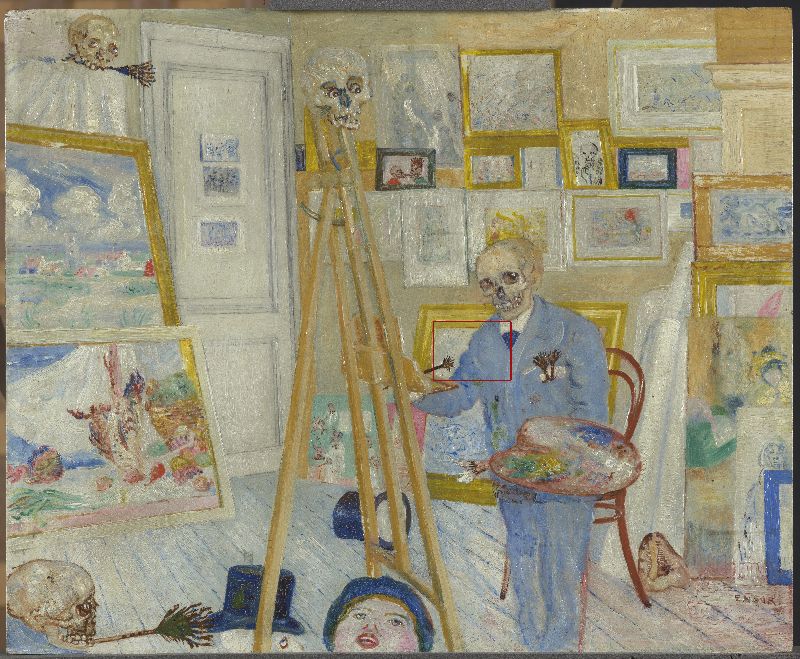
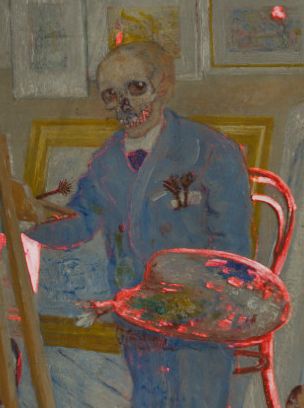
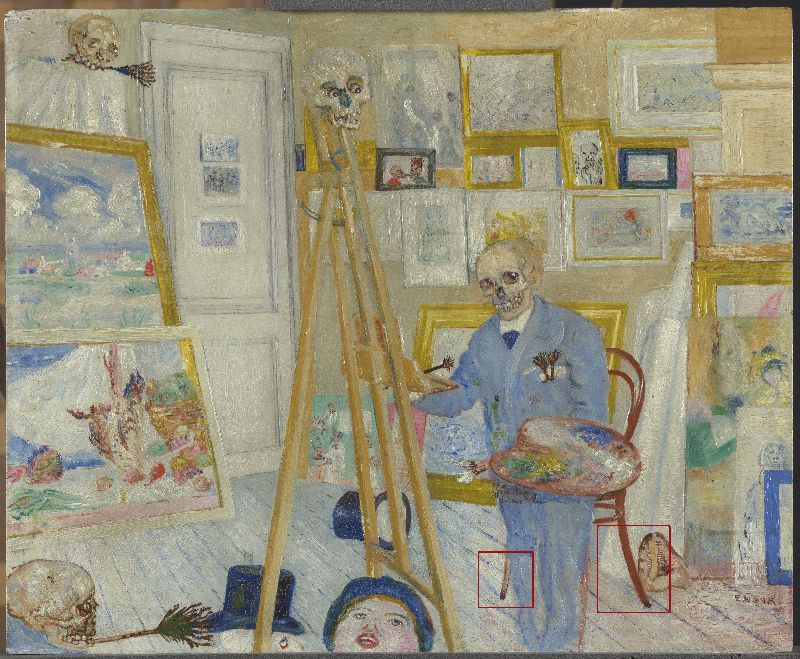
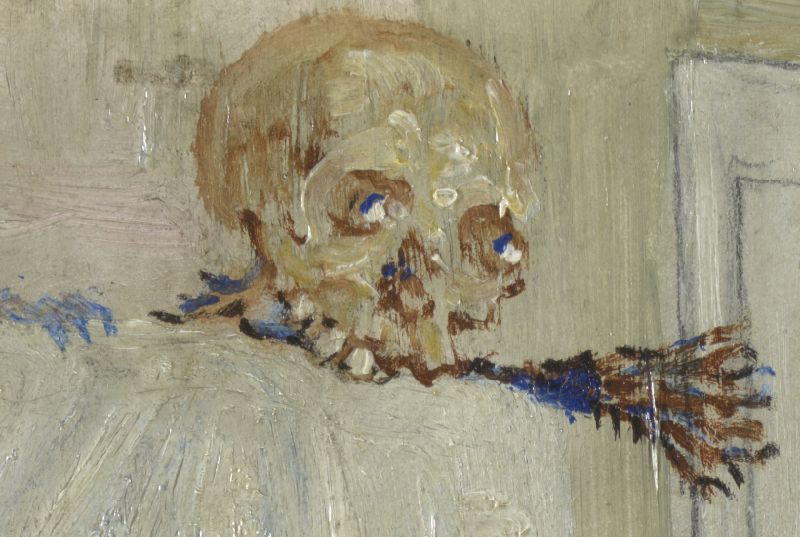
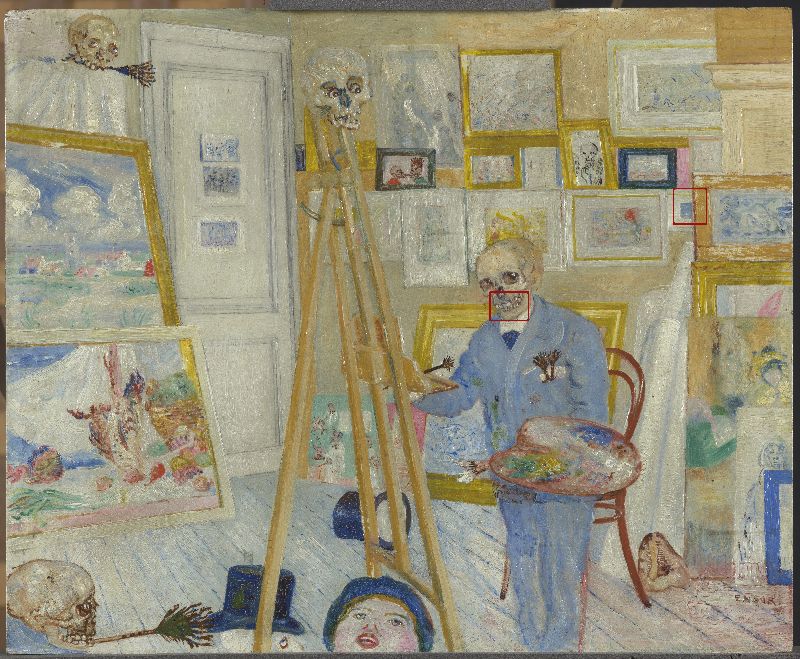
hewears a white shirt and a black tie. In his right hand, he holds a brush backwards. In his left hand, he holds a painter's palette and more brushes. In the breast pocket of his jacket are a handkerchief and two more brushes. The easel is three-legged and has a hook at the top to adjust its position. On the easel's tablet, we see the back of a small painting. Against the wall next to the door and the wall behind the painter, we see numerous framed paintings and prints. On the left, a large landscape and a large still life. Behind the painter smaller works. On the right, there seems to be a white cabinet against which, again, some larger works lean. Next to this cabinet, some white scrolls lean against the wall. Behind the painter is a simple Thonet chair, the still popular Viennese coffee house chair with the typical pleated wooden backrests end pleated joint. There is a shell on the floor behind the chair. In the foreground, on the far right, a skeleton of which in fact only the head with a brush in its mouth is visible. Next to it, the top of a head with a dark top hat and a carnival mask. Behind the paintings on the left, next to the door, a skeleton appears with a brush in its mouth. On the easel at the top again a skull with eyes in its sockets. Behind the easel is a second dark top hat. Three prints were attached to the closed door.
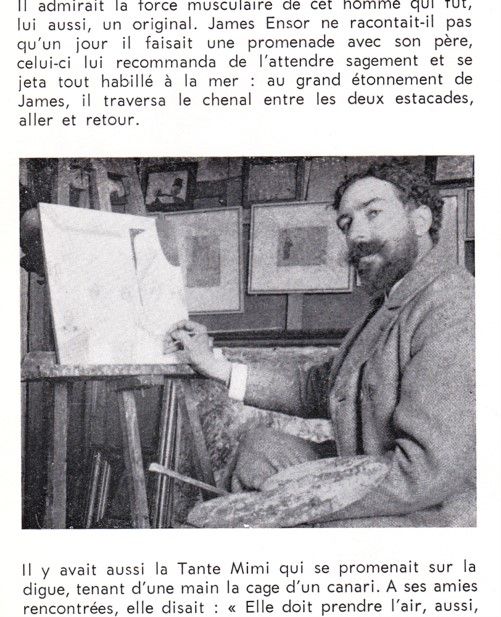
power of the mediaand had himself photographed very often. As a result, articles about his work were illustrated with photographs of the artist.
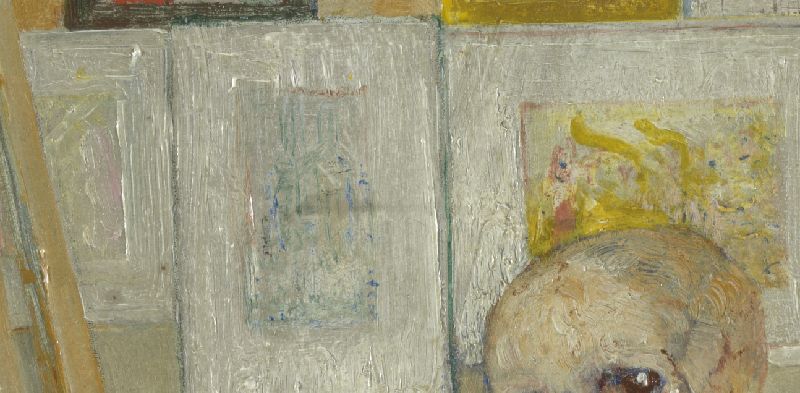
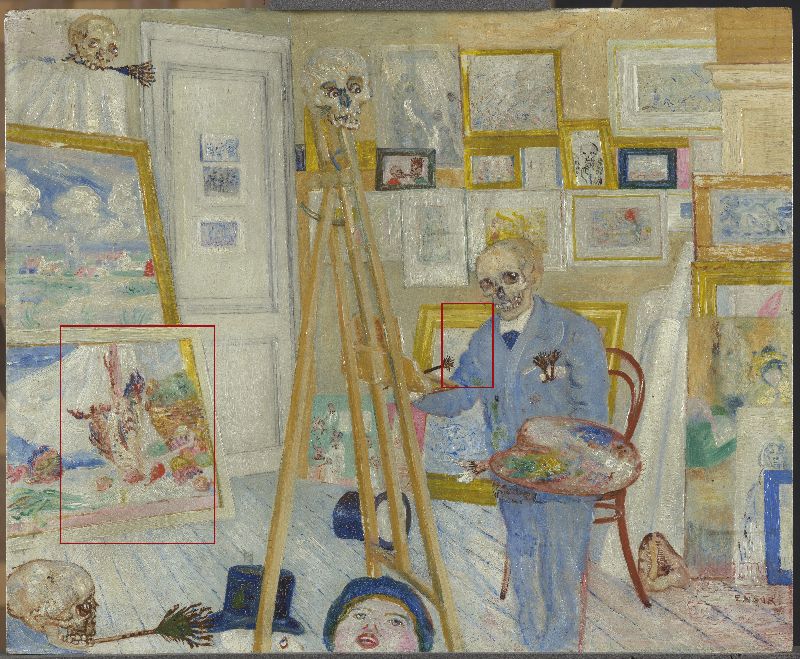
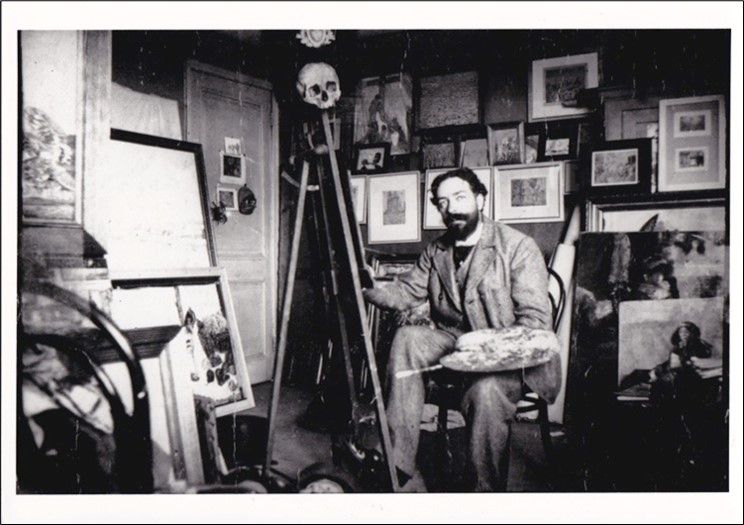
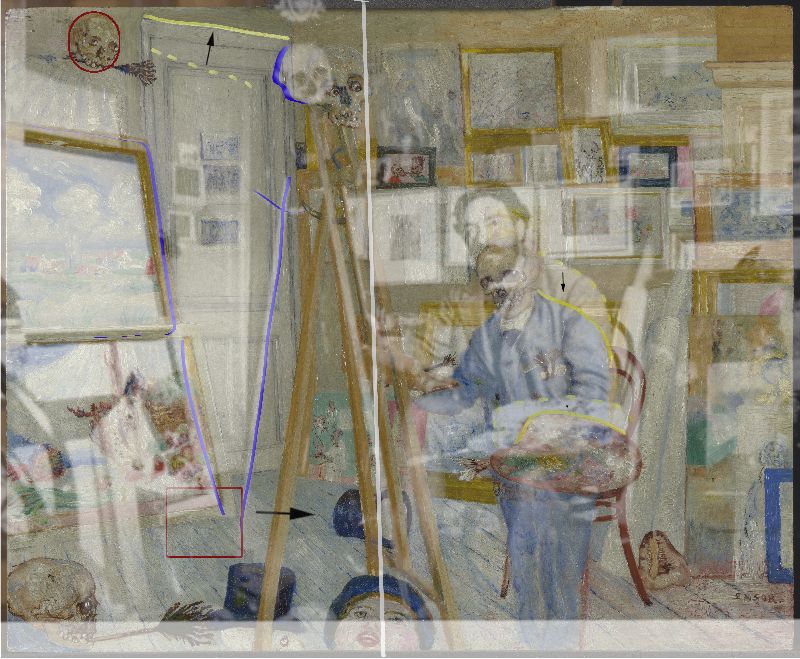
Tranquil and Serene. The Descent from the Crossfrom the series entitled Visions. The Aureoles of Christ or the Sensibilities of Light (1886), The Battle of the Golden Spurs (1891) and an unrecognisable depiction of blue characters on a white background, in the photograph we recognise in that place The Skaters (1889), but for the painting Ensor changed the format. Below: Skeletons arguing over a buckling (1891), The Calvary (Ensor crucified, 1886?), an unrecognisable drawing, Musical Skeletons (1888), The Boiled Egg, Crab and Shrimp (1891). Below that, two unrecognisable works, further The Cathedral (1886), an unrecognisable coloured etching, The Murder (1888). In the photograph next to that we recognise Fantastic Musicians (1888) but in the painting Ensor shows an unrecognisable, informal representation. On the floor, Ensor has placed The Dangerous Cooks (1896) - it is the painting that was actually on the easel. Next to it is an unusually large canvas on which Ensor has placed a character from Ecce homo, Christ and the Critics (1891). On the far right, we recognise the pink parasol from The Astonishment of Mask Wouse (1889), Afternoon in Ostend (1881) and The Witch (1883). In the photograph, on the front left, we see a fragment of another large still life (Shells, 1895?). For the painting, Ensor made the photograph narrower so that part of the interior disappears on the right and left. He did not render the spider, the carnival mask of a
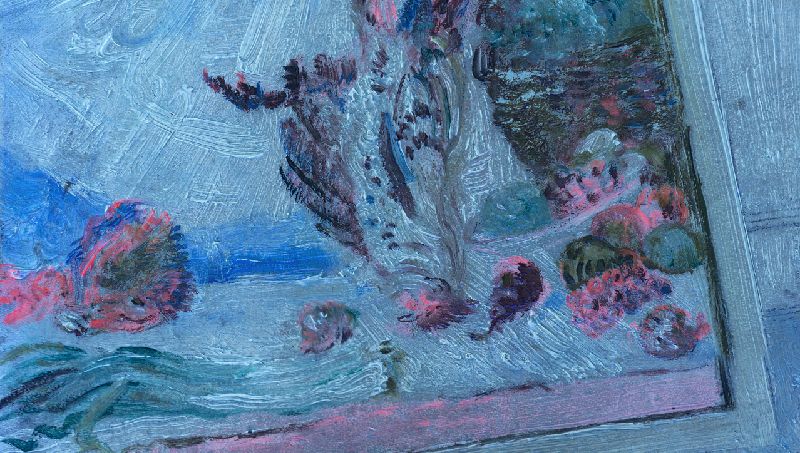
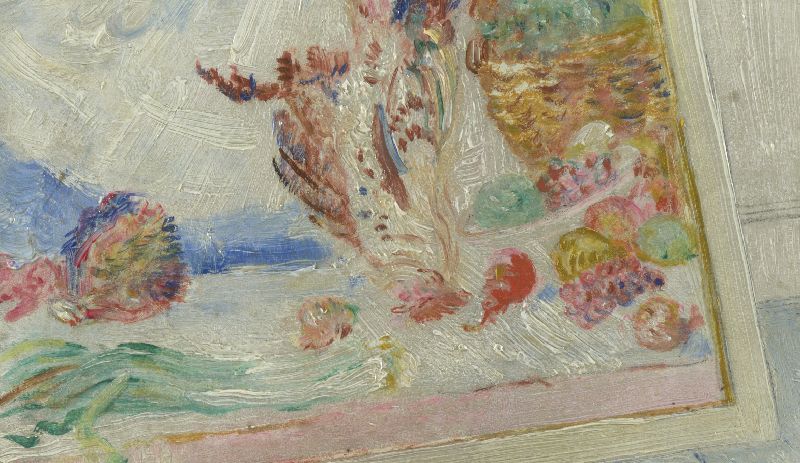
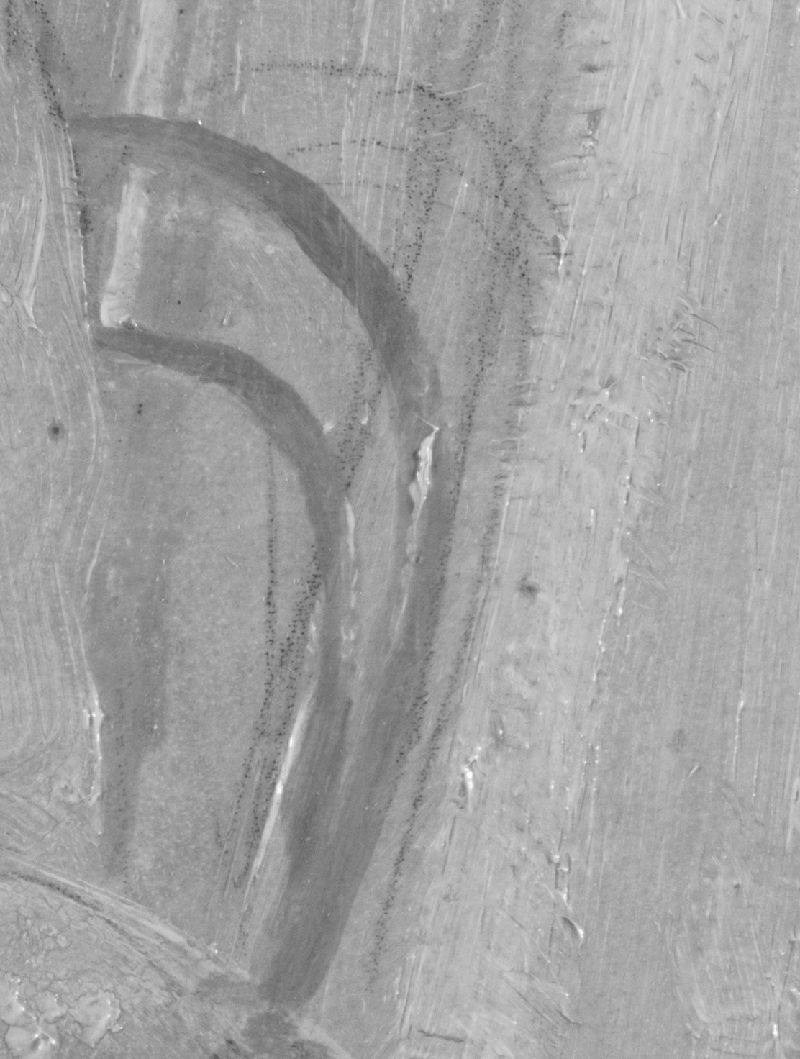
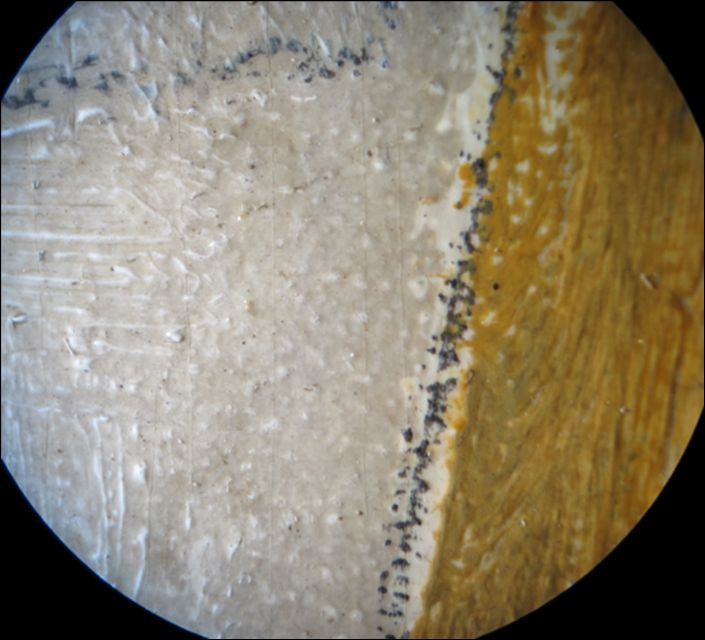
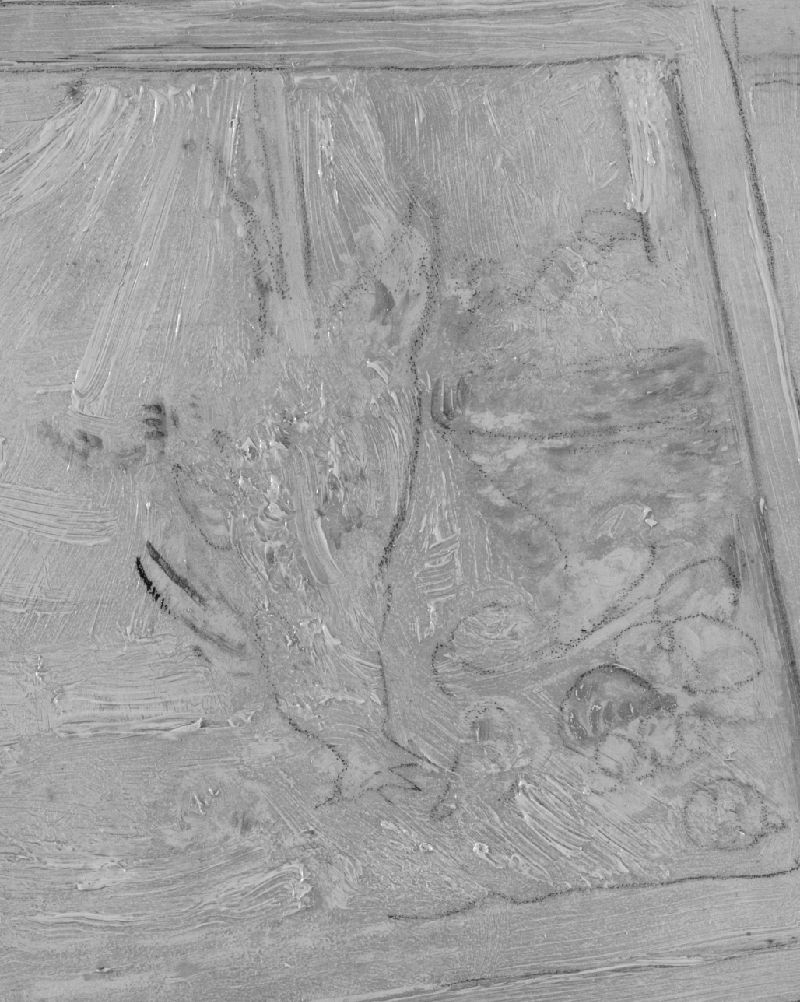
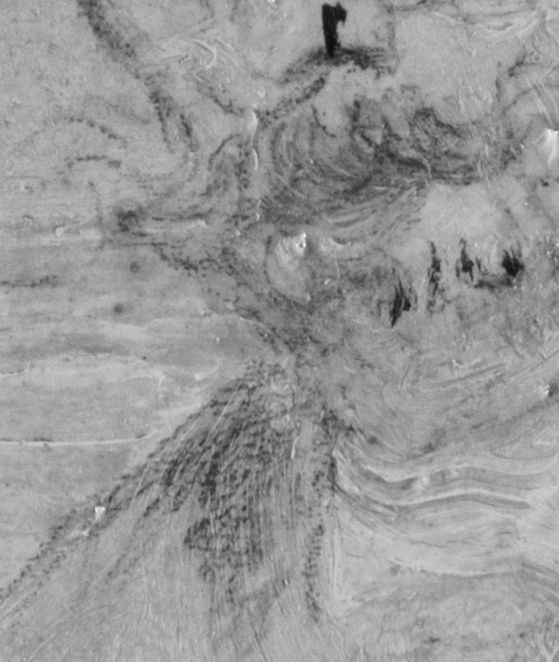
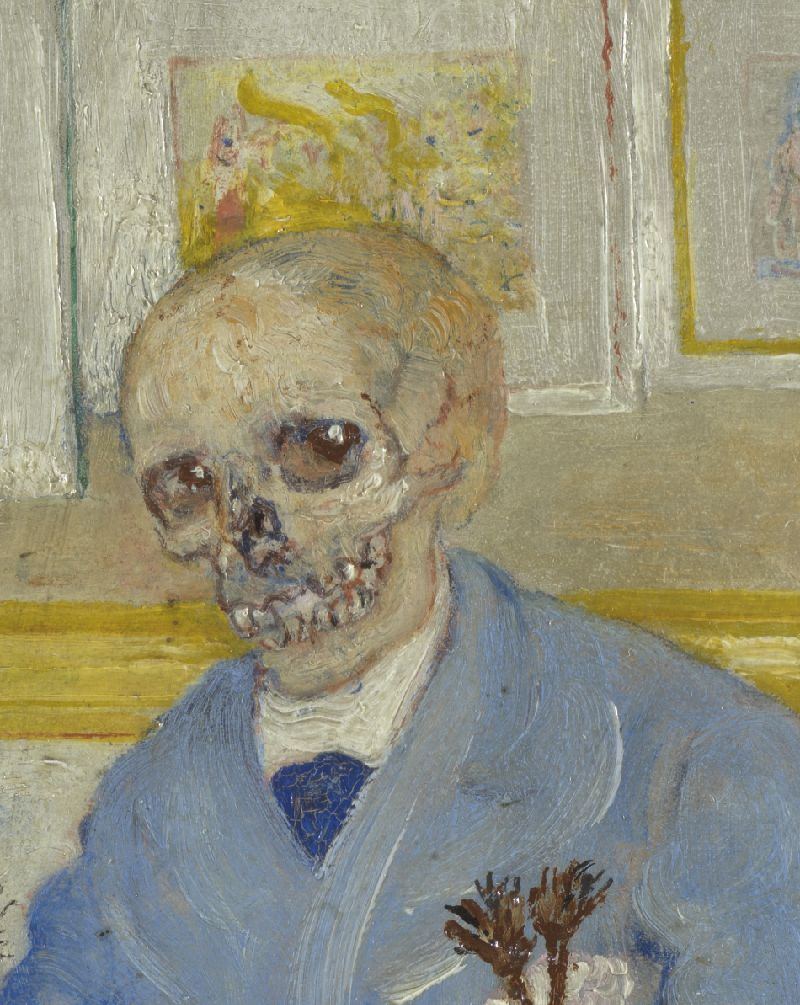
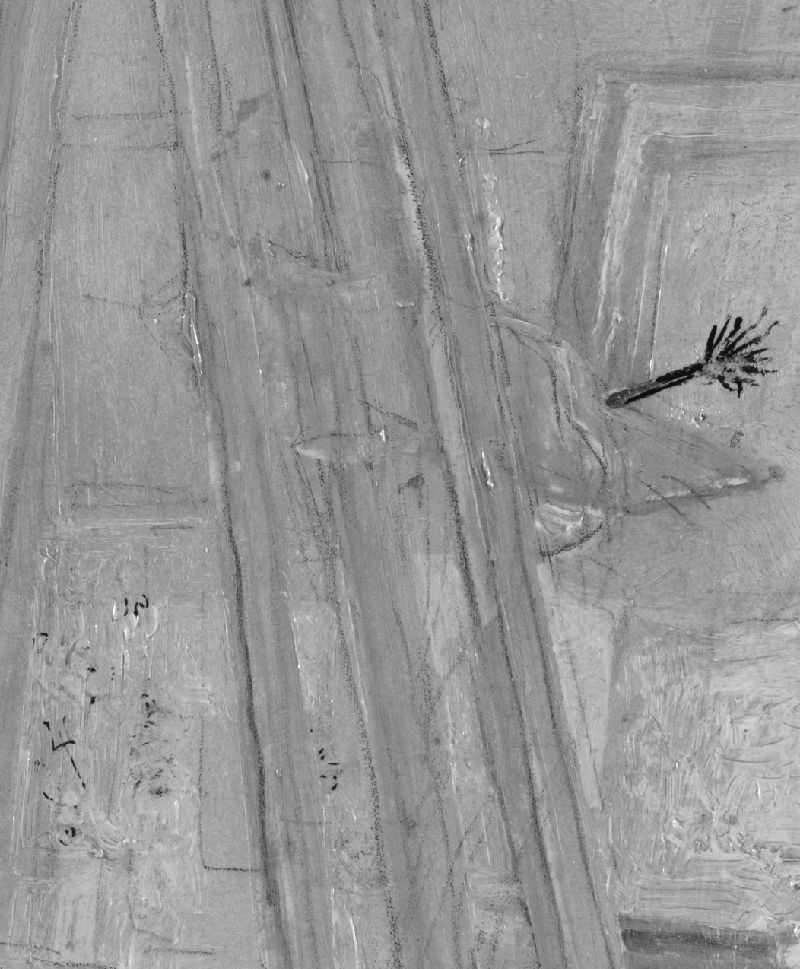
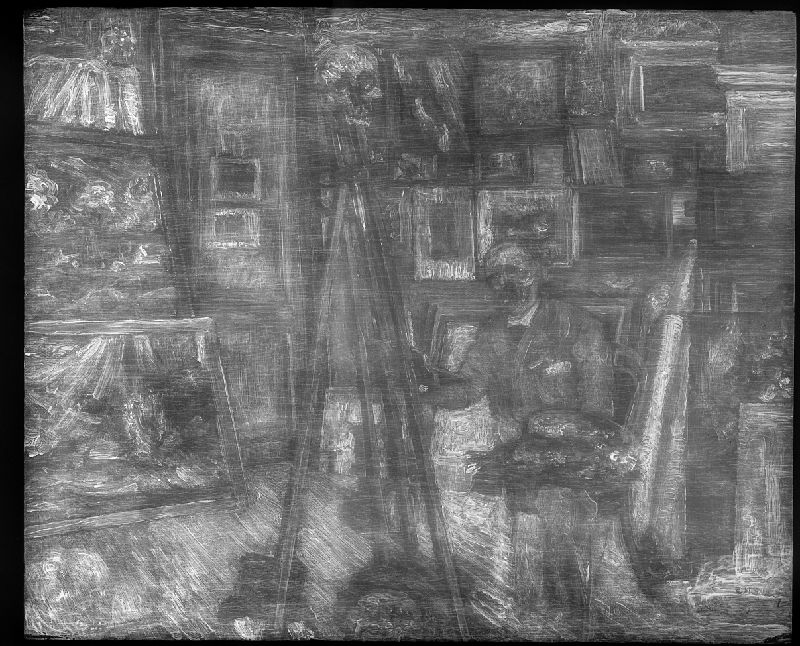
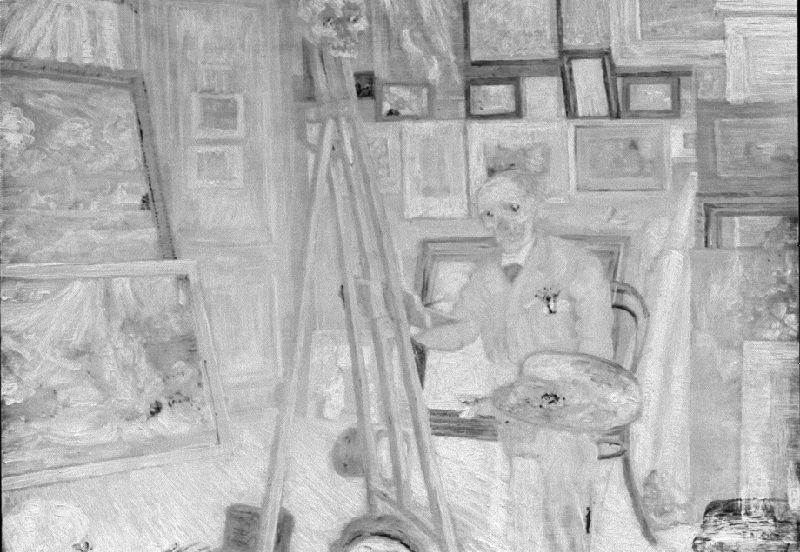
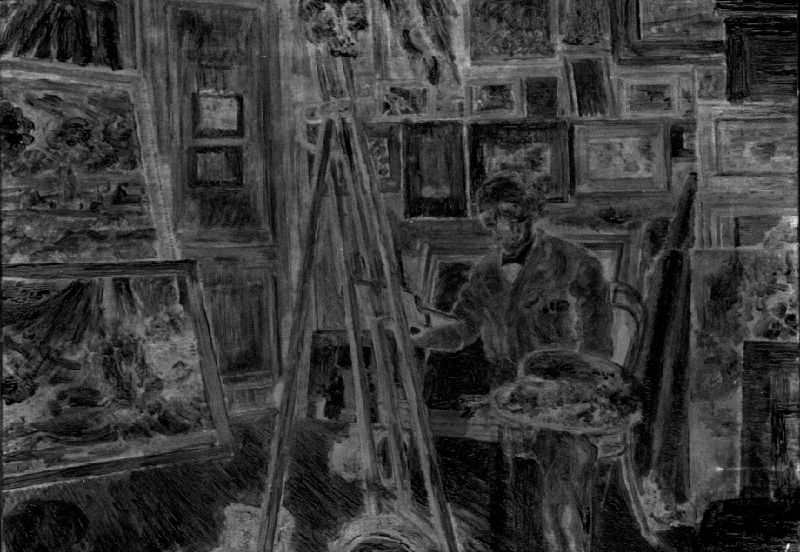
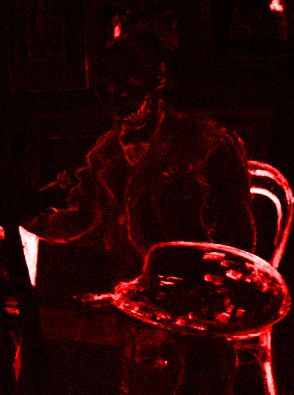
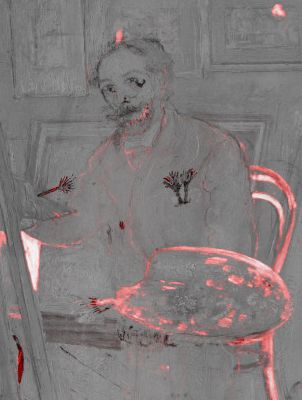
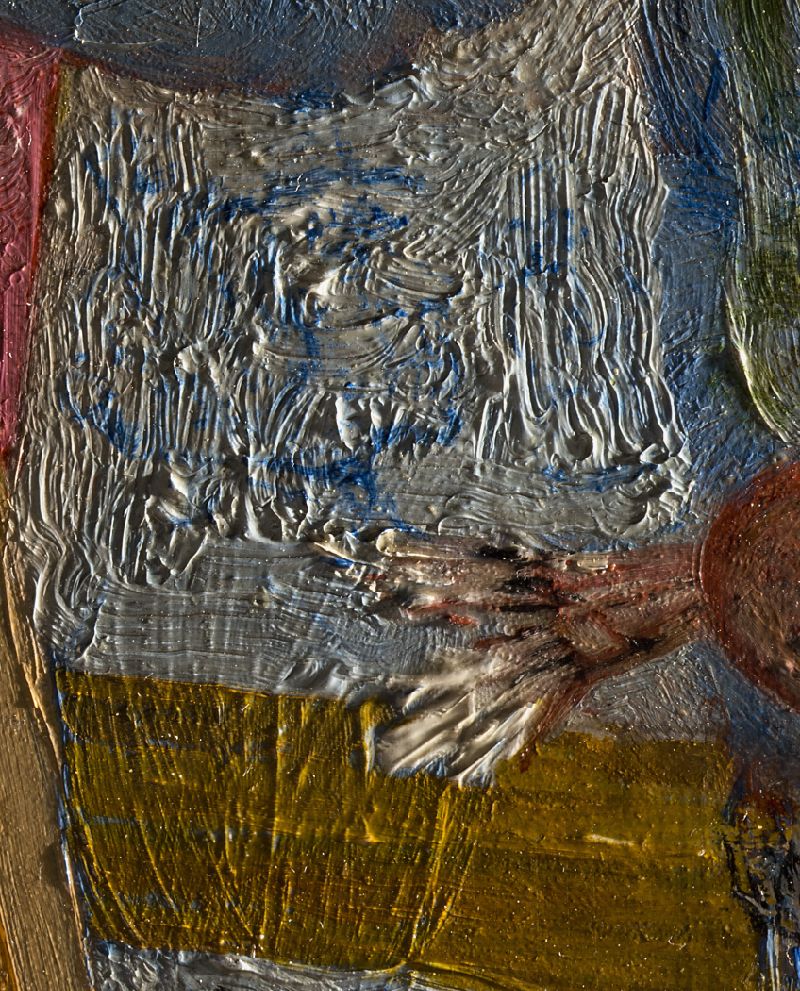
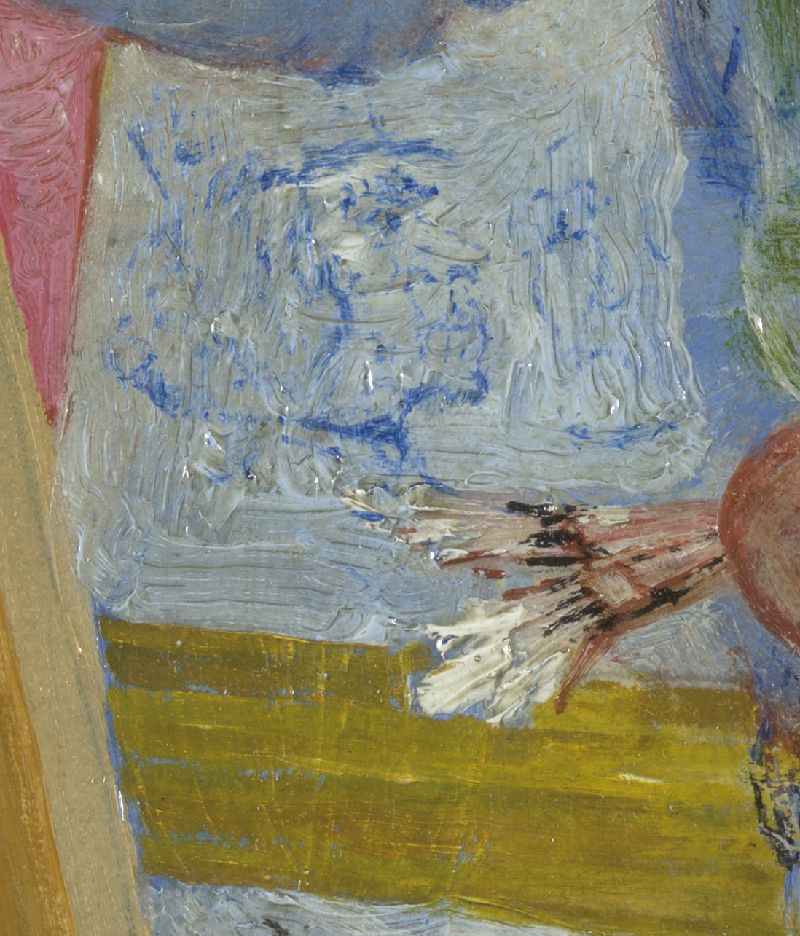
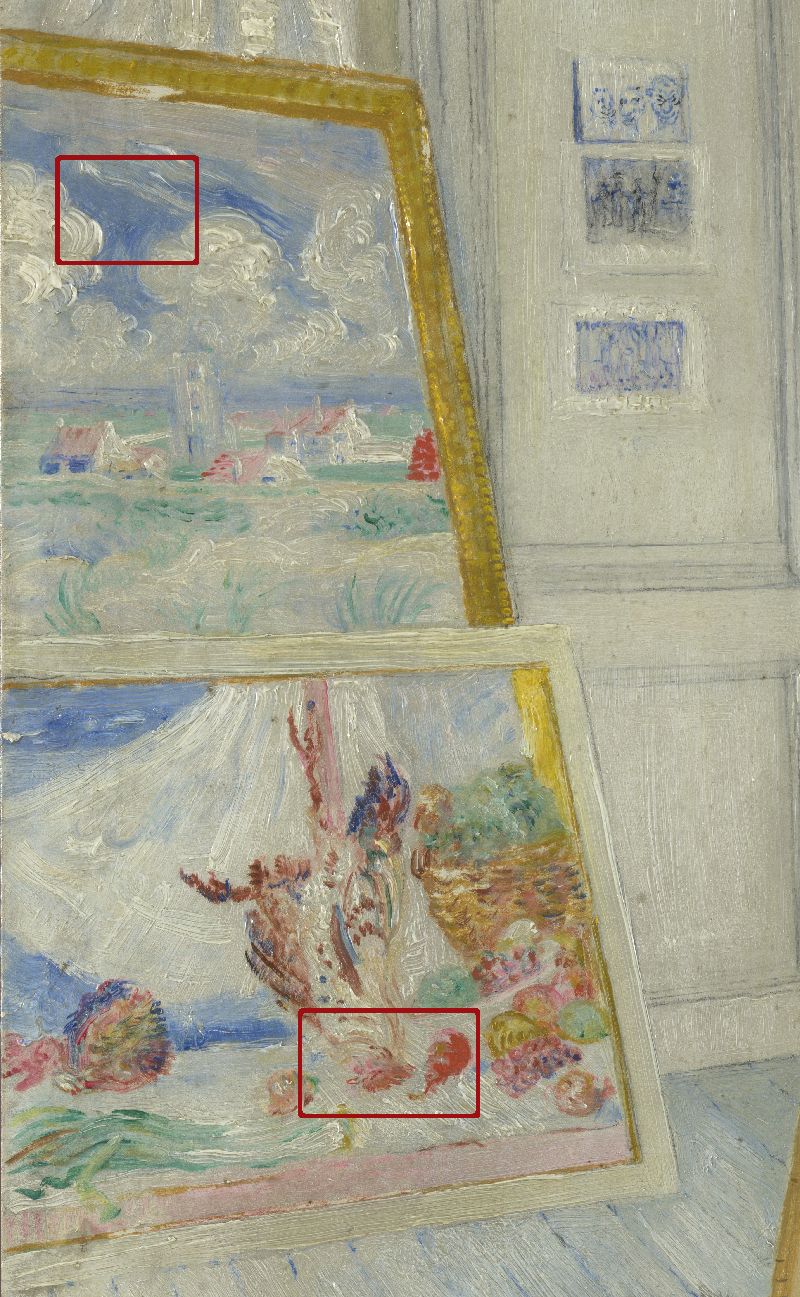
blackman and the prints on the door. He shows the still life with The Dead Cockerel (1894) almost in its entirety; the photograph shows only a fragment of it. The most striking change is, of course, the replacement of his own facial features with the depiction of a skull with eyes in sockets. The infrared image shows that Ensor copied the photograph in black chalk on the white grounding of the panel. Initially, he also copied his facial features, part of the coat and the palette but material-technical analysis shows that once Ensor painted over the underdrawing, he replaced his facial features with the skull. On the infrared image, lines of the sitting Ensor's legs are barely discernible. In the painting, he transformed the seated figure into an upright, small character. The palette was tilted to depict it almost entirely frontally.
Chinoiseriesand a selection of small paintings and drawings on panel from 1888 to 1892, around the portrait Isidoor Verheyden painted of Ensor in 1885; the Portrait of Emma Lambotte (1907) with in the background In the Conservatory (1894?) and Scandalised Masks (1883); Portrait of Alexandra Daveluy (1927); The Studio of James Ensor (1930) and The Cardinal Points (1932?).
decadentrepertoire. In Ensor's work, the skeleton sometimes personifies death, a menacing character, but most often skeletons are alter egos for human beings. As a skeleton, every human action inevitably becomes absurd. Ensor also represented himself as a skeleton several times. My portrait in 1960 (1888) shows a skeleton on a bed, as if it were Ensor's remains on his deathbed. On the head is still hair, on the feet the skeleton wears shoes. A large spider is pictured in the bottom left and two snails crawl on the bed on the right. A year later, he etched a self-portrait after a photograph of himself on the façade of the Rousseau family's house in Brussels. Only one copy of that etching exists because in the 2nd state he transformed his facial features into a defleshed skull. The skeleton drawing fine childlike things (1889) again shows a skeletonised self-portrait next to a chimney and in front of a mirror in which ladies appear, recalling Watteau's paintings. In conjunction with representations such as Demons Tormenting Me (1888) or The Calvary (1889) with Ensor as the crucified, and the skeletonised self-portraits are considered images in which Ensor portrays himself as powerless, misunderstood and threatened. Lack of recognition and appreciation is documented by incidents in his career, notably the rejection of his work in official exhibitions but also in the exhibitions of progressive art circles, notably L'Essor and even Les XX and La Libre Esthétique. Remarks by Ensor in letters and biographical texts seem to confirm this. This image has led to several psychoanalytic interpretations of Skeleton Painter and related works. However, we can question the actual misunderstanding of his talent and his work, and the extent to which he suffered from this misunderstanding. Moreover, he continued to cultivate the image of a misunderstood genius long after he became the hero of the Belgian and German avant-garde.
pince sans rire, in the company of other macabre art brothers.
trophyfor the museum. Apparently, its authenticity was in doubt and, at the request of the museum management board, a committee was formed to look into the matter. In the self-published overview of his work that Ensor wrote for Emile Verhaeren's monograph (1908) and updated for Grégoire Le Roy, Ensor himself places the painting in 1896. But Le Roy lists it among the works of 1895. The most recent works in the picture and the painting date from 1896. There seems no reason to doubt that dating.
hewears a white shirt and a black tie. In his right hand, he holds a brush backwards. In his left hand, he holds a painter's palette and more brushes. In the breast pocket of his jacket are a handkerchief and two more brushes. The easel is three-legged and has a hook at the top to adjust its position. On the easel's tablet, we see the back of a small painting. Against the wall next to the door and the wall behind the painter, we see numerous framed paintings and prints. On the left, a large landscape and a large still life. Behind the painter smaller works. On the right, there seems to be a white cabinet against which, again, some larger works lean. Next to this cabinet, some white scrolls lean against the wall. Behind the painter is a simple Thonet chair, the still popular Viennese coffee house chair with the typical pleated wooden backrests end pleated joint. There is a shell on the floor behind the chair. In the foreground, on the far right, a skeleton of which in fact only the head with a brush in its mouth is visible. Next to it, the top of a head with a dark top hat and a carnival mask. Behind the paintings on the left, next to the door, a skeleton appears with a brush in its mouth. On the easel at the top again a skull with eyes in its sockets. Behind the easel is a second dark top hat. Three prints were attached to the closed door.
power of the mediaand had himself photographed very often. As a result, articles about his work were illustrated with photographs of the artist.
Tranquil and Serene. The Descent from the Crossfrom the series entitled Visions. The Aureoles of Christ or the Sensibilities of Light (1886), The Battle of the Golden Spurs (1891) and an unrecognisable depiction of blue characters on a white background, in the photograph we recognise in that place The Skaters (1889), but for the painting Ensor changed the format. Below: Skeletons arguing over a buckling (1891), The Calvary (Ensor crucified, 1886?), an unrecognisable drawing, Musical Skeletons (1888), The Boiled Egg, Crab and Shrimp (1891). Below that, two unrecognisable works, further The Cathedral (1886), an unrecognisable coloured etching, The Murder (1888). In the photograph next to that we recognise Fantastic Musicians (1888) but in the painting Ensor shows an unrecognisable, informal representation. On the floor, Ensor has placed The Dangerous Cooks (1896) - it is the painting that was actually on the easel. Next to it is an unusually large canvas on which Ensor has placed a character from Ecce homo, Christ and the Critics (1891). On the far right, we recognise the pink parasol from The Astonishment of Mask Wouse (1889), Afternoon in Ostend (1881) and The Witch (1883). In the photograph, on the front left, we see a fragment of another large still life (Shells, 1895?). For the painting, Ensor made the photograph narrower so that part of the interior disappears on the right and left. He did not render the spider, the carnival mask of a
blackman and the prints on the door. He shows the still life with The Dead Cockerel (1894) almost in its entirety; the photograph shows only a fragment of it. The most striking change is, of course, the replacement of his own facial features with the depiction of a skull with eyes in sockets. The infrared image shows that Ensor copied the photograph in black chalk on the white grounding of the panel. Initially, he also copied his facial features, part of the coat and the palette but material-technical analysis shows that once Ensor painted over the underdrawing, he replaced his facial features with the skull. On the infrared image, lines of the sitting Ensor's legs are barely discernible. In the painting, he transformed the seated figure into an upright, small character. The palette was tilted to depict it almost entirely frontally.
Chinoiseriesand a selection of small paintings and drawings on panel from 1888 to 1892, around the portrait Isidoor Verheyden painted of Ensor in 1885; the Portrait of Emma Lambotte (1907) with in the background In the Conservatory (1894?) and Scandalised Masks (1883); Portrait of Alexandra Daveluy (1927); The Studio of James Ensor (1930) and The Cardinal Points (1932?).
decadentrepertoire. In Ensor's work, the skeleton sometimes personifies death, a menacing character, but most often skeletons are alter egos for human beings. As a skeleton, every human action inevitably becomes absurd. Ensor also represented himself as a skeleton several times. My portrait in 1960 (1888) shows a skeleton on a bed, as if it were Ensor's remains on his deathbed. On the head is still hair, on the feet the skeleton wears shoes. A large spider is pictured in the bottom left and two snails crawl on the bed on the right. A year later, he etched a self-portrait after a photograph of himself on the façade of the Rousseau family's house in Brussels. Only one copy of that etching exists because in the 2nd state he transformed his facial features into a defleshed skull. The skeleton drawing fine childlike things (1889) again shows a skeletonised self-portrait next to a chimney and in front of a mirror in which ladies appear, recalling Watteau's paintings. In conjunction with representations such as Demons Tormenting Me (1888) or The Calvary (1889) with Ensor as the crucified, and the skeletonised self-portraits are considered images in which Ensor portrays himself as powerless, misunderstood and threatened. Lack of recognition and appreciation is documented by incidents in his career, notably the rejection of his work in official exhibitions but also in the exhibitions of progressive art circles, notably L'Essor and even Les XX and La Libre Esthétique. Remarks by Ensor in letters and biographical texts seem to confirm this. This image has led to several psychoanalytic interpretations of Skeleton Painter and related works. However, we can question the actual misunderstanding of his talent and his work, and the extent to which he suffered from this misunderstanding. Moreover, he continued to cultivate the image of a misunderstood genius long after he became the hero of the Belgian and German avant-garde.
pince sans rire, in the company of other macabre art brothers.
trophyfor the museum. Apparently, its authenticity was in doubt and, at the request of the museum management board, a committee was formed to look into the matter. In the self-published overview of his work that Ensor wrote for Emile Verhaeren's monograph (1908) and updated for Grégoire Le Roy, Ensor himself places the painting in 1896. But Le Roy lists it among the works of 1895. The most recent works in the picture and the painting date from 1896. There seems no reason to doubt that dating.
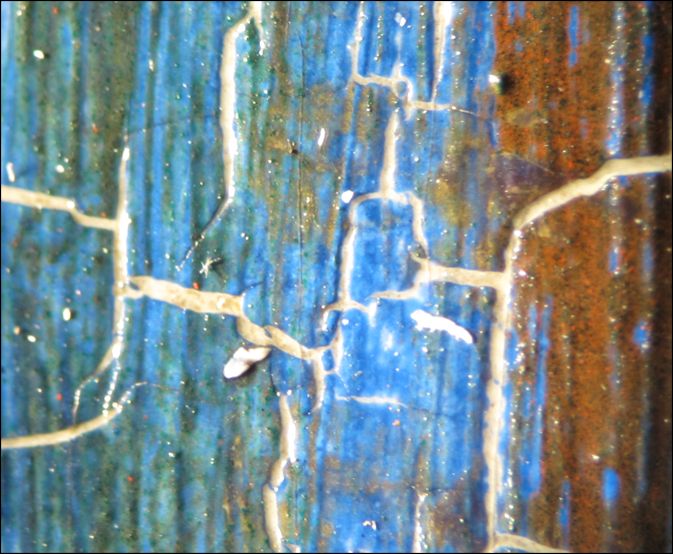
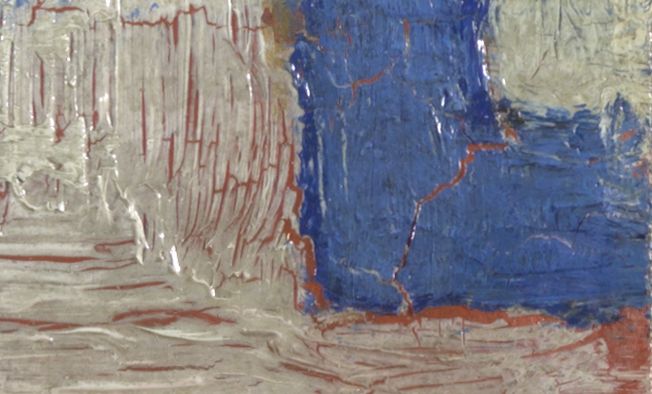
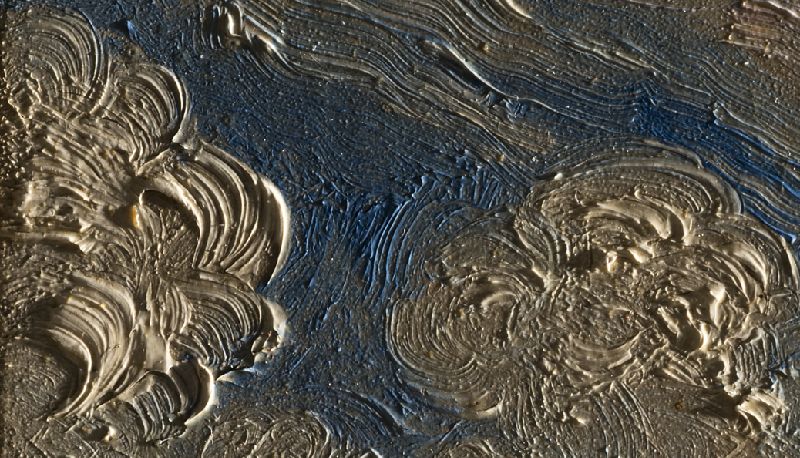
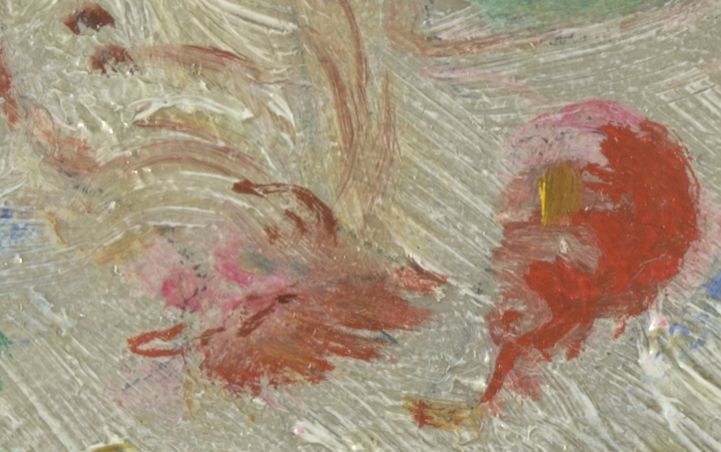
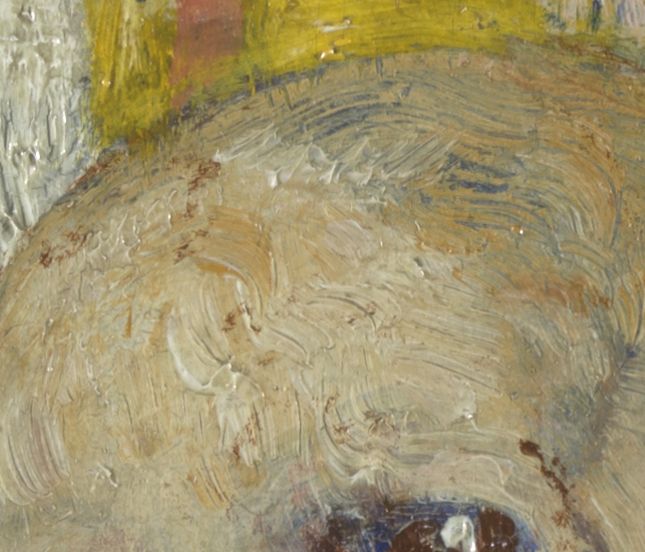
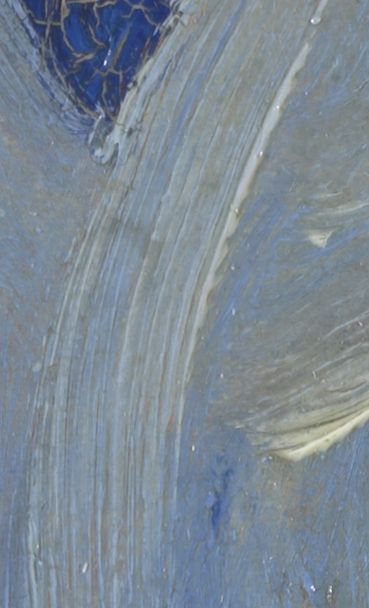
ENSORat lower right in the still wet white paint layer. The signature was added in a reddish-brown pigment and traced over again in a black and darker brown pigment. The colour palette was investigated using pXRF and MA-XRF and contains lead white, cadmium yellow, cobalt blue, vermillion, red lake, chrome green and earth pigments.
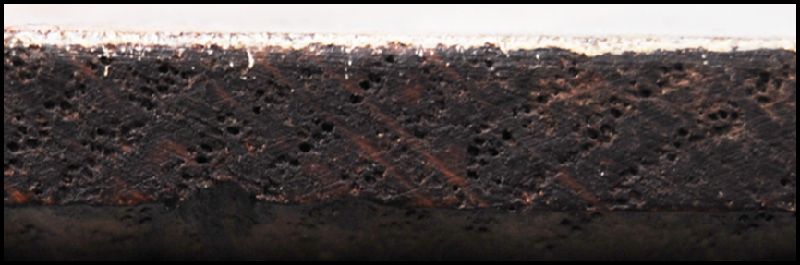
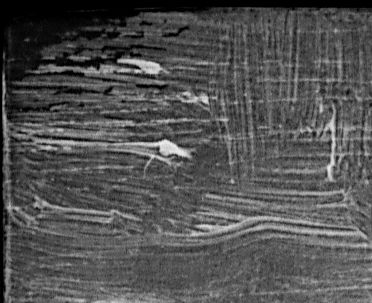
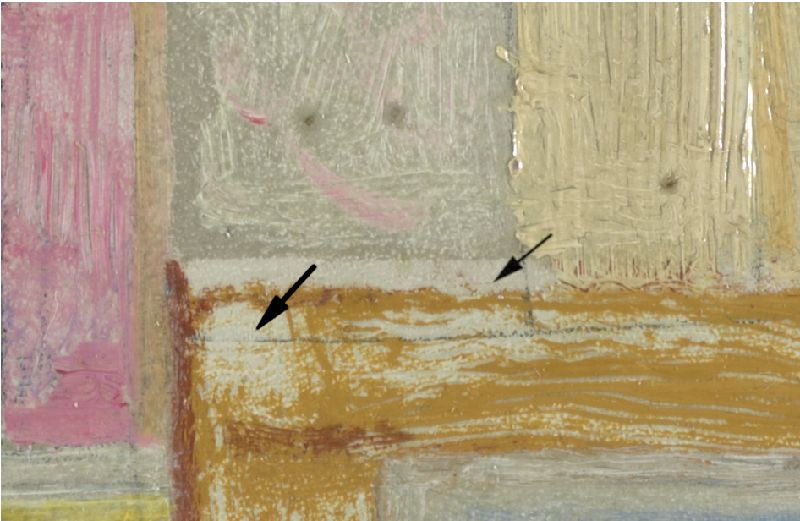
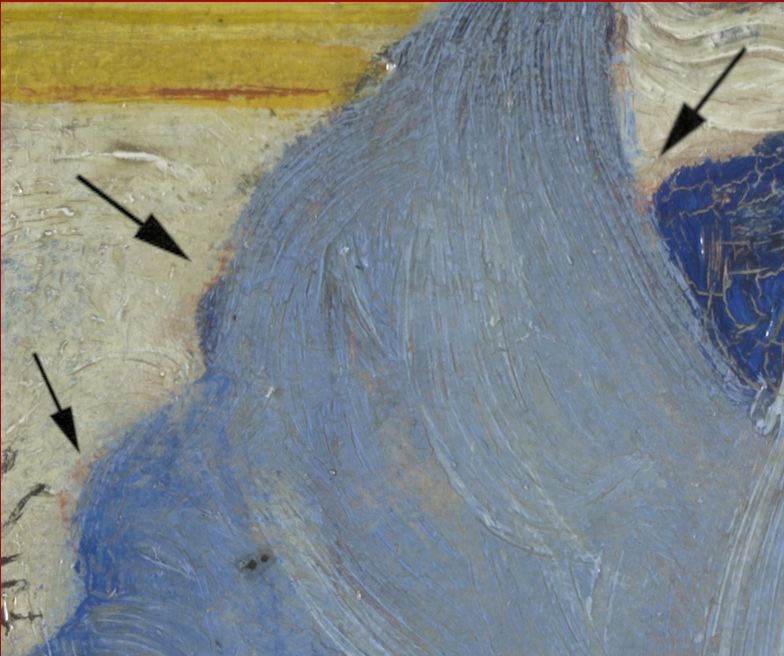
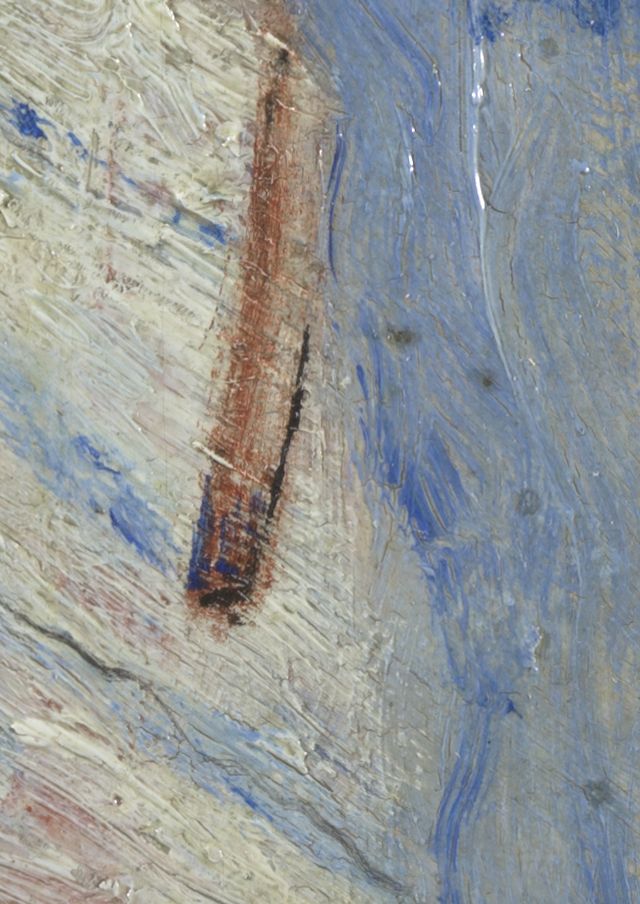
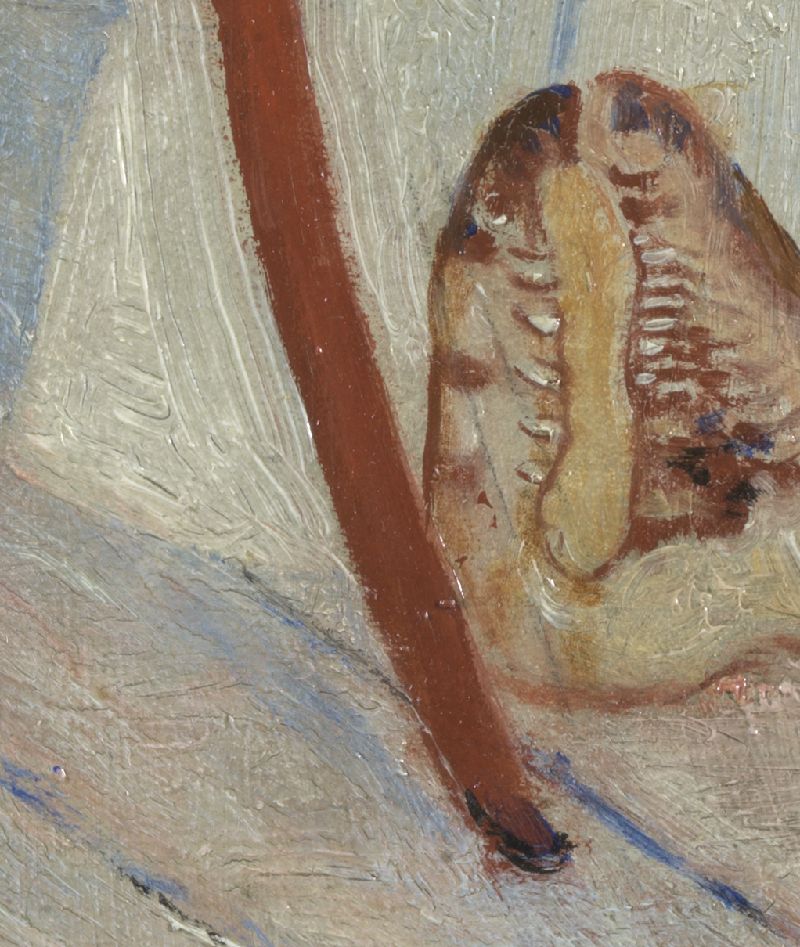
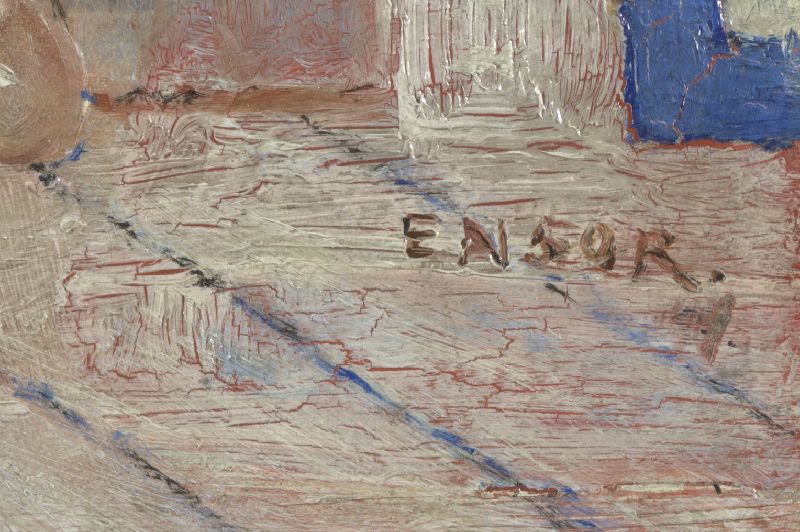
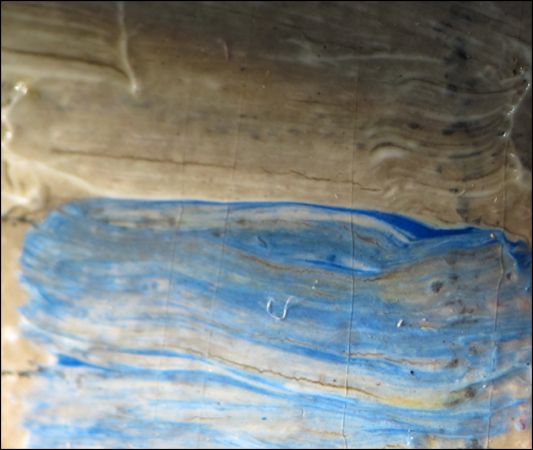
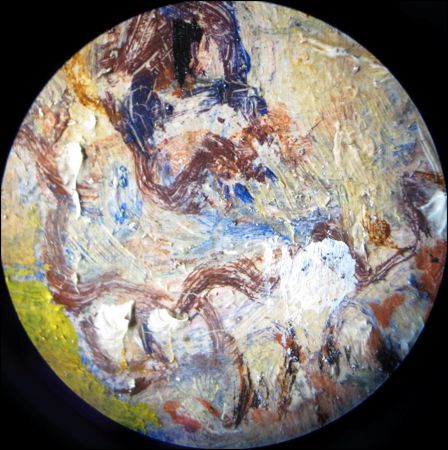
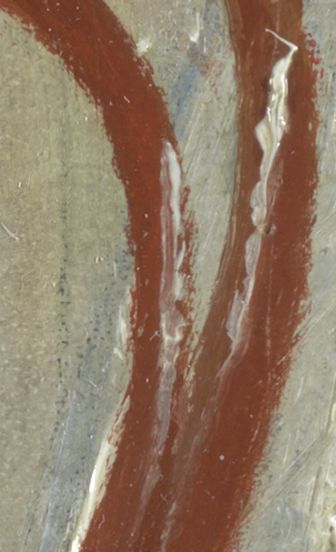
ENSORwas added at lower right in the still wet white paint layer.