Couples in the arts

BY SISKA BEELE
We can hardly imagine anything more beautiful: sharing a passion for love alongside a passion for art. An artist couple living and working in harmony, inspiring and uplifting each other. But it doesn’t always work that way. Relationships between artist couples are often intense, sometimes deeply tragic, at other times stormy or doomed to fail. Stereotypical role patterns and power imbalances get in the way. What remains are inequality, jealousy, and frustration.
Virginie Demont-Breton & Adrien Demont
A match made in heaven
Virginie Breton (1859–1935) grew up in an artist family in Courrières, northern France. She learned her craft in her father Jules Breton’s studio, a respected painter of rural scenes. There, she met Adrien Demont (1851–1928).
She was barely fourteen, he twenty-one. The notary’s son from Douai had abandoned his law studies to fully devote himself to painting. Émile Breton, Virginie’s uncle, became his mentor. They had three daughters, and Virginie continued to paint. Under the name Virginie Demont-Breton, she, like her husband, built her own artistic career.
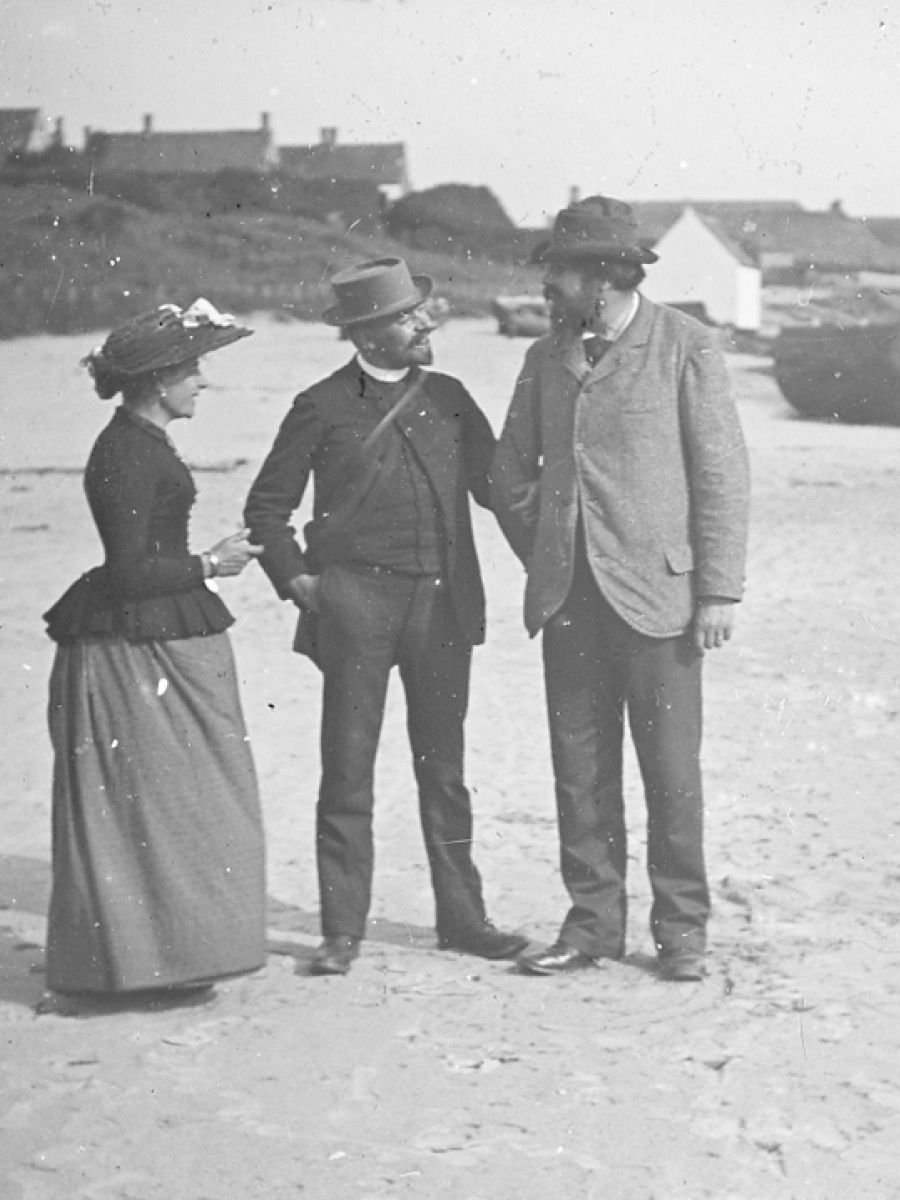
Virginie Breton (left) and Adrien Demont (right) with the painter Georges Maroniez in the center on the beach at Wissant.
From 1881, the couple spent their summers in Wissant, a small fishing village on the Opal Coast. Later, the family settled there permanently and built a villa in Neo-Egyptian style: the Typhonium. Adrien became captivated by the landscape, painting the village, the sea, the dunes, and the chalk cliffs. Virginie was enchanted by everyday life in the village—the children on the beach and the fishermen at sea.
Painters Adrien and Virginie were a successful and celebrated artist couple. They represent a rare example of an artistic relationship based on equality and mutual admiration, without jealousy or rivalry. From this exceptionally privileged position, Virginie campaigned for many years to increase female participation in the male-dominated art world.

Into the Water! - Virginie Elodie Demont-Breton, KMSKA

The Cloud - Adrien-Louis Demont, KMSKA
Louise Laridon & Emile Vloors
Un ménage à trois?
This remarkable story begins at the Antwerp Academy at the end of the 19th century, where Emile Vloors (1871–1952) met the two Laridon sisters. While Emile honed his skills in grand history painting, Louise (1869–1943) took lessons with landscape painter Pierre Van Havermaet. Female students had only recently been admitted to the academy. Her younger sister Lucie was also an excellent draughtswoman and painter. Emile, Louise, and Lucie became inseparable and remained close for the rest of their lives.

The sisters Louise (right) and Lucie (left) playing chess in the apartment above the Stadsfeestzaal, after 1918. - Photo from the artist’s estate, private collection, Antwerp

Azaleas - Louise Laridon, KMSKA
Vloors quickly gained a solid reputation in the conservative art scene of the Scheldt city. He was a highly sought-after painter of elegant portraits and created several monumental and decorative compositions for both private homes and public buildings. The sisters preferred landscapes, still lifes, flowers, and cats, mostly in pastel and watercolor, and on a small scale.
Although all three were active as artists, Emile was the leading figure, while Louise and Lucie played second fiddle. Above all, they were Vloors’ great muses and favorite models—even after Emile ultimately married Louise on 29 December 1914 during their exile in Great Britain.
Valentine Prax & Ossip Zadkine
No Musée Zadkine/Prax in Paris
When asked who the greatest living artist was, Ossip Zadkine (1890–1967) always replied, “Henry Moore and my wife Valentine Prax.” He added, “If she had been a man, she would have achieved much more.” Valentine (1899–1981) and Ossip met each other in Paris in 1918.
She was a shy girl from French Algeria dreaming of a life as an artist; he was an extroverted and proud Russian sculptor who could bring tree trunks and blocks of stone to life. He introduced her to the bustle of Montparnasse, where the classically trained Valentine discovered the freedom of modern art.

Valentine Prax and Ossip Zadkine

Woman's Torso - Ossip Zadkine, KMSKA
Zadkine and Prax each followed their own artistic path, with mutual respect for each other and their work. Valentine exhibited regularly and sold her colorful, lively paintings so successfully that she was initially the primary breadwinner. Yet Zadkine always came first for her. She managed the business side, maintained contacts, arranged his long trips, and forgave his affairs.
During World War II, Zadkine fled to New York. Valentine remained alone in occupied Paris, doing everything she could to protect her husband’s “degenerate” sculptures. Sick, unhappy, and penniless, Zadkine returned to Valentine in Paris. The couple had planned a Musée Zadkine/Prax for their legacy—but the city of Paris decided otherwise: it became the Musée Zadkine.
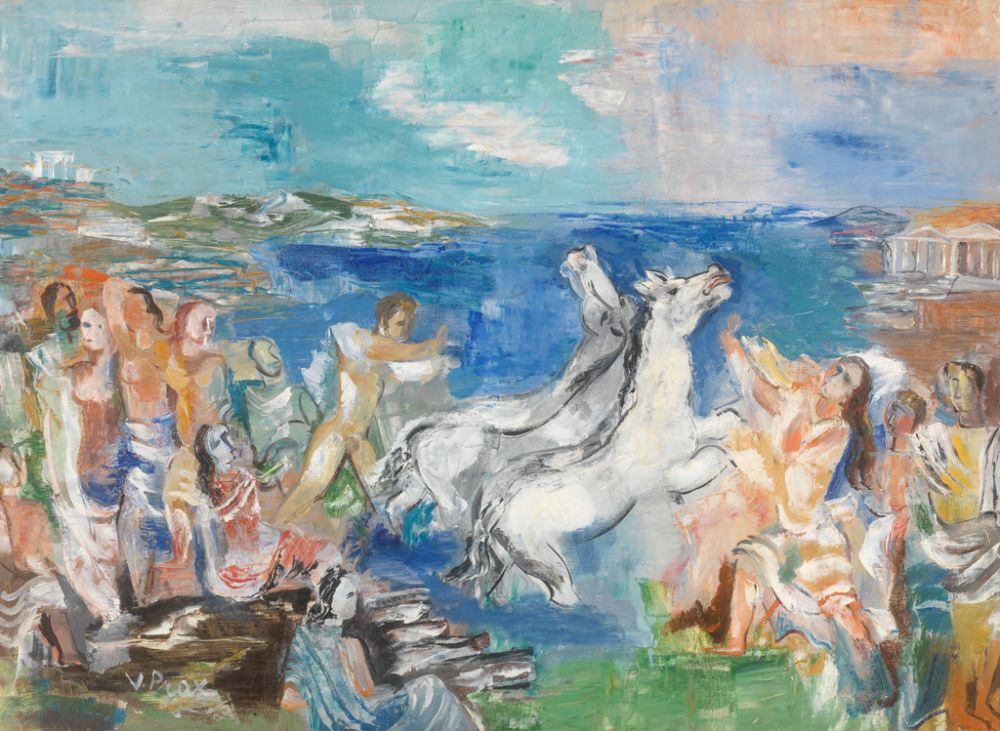
Antique vision - Valentine Prax, KMSKA
This article previously appeared in our museum magazine Zaal Z.


