Creative with kings

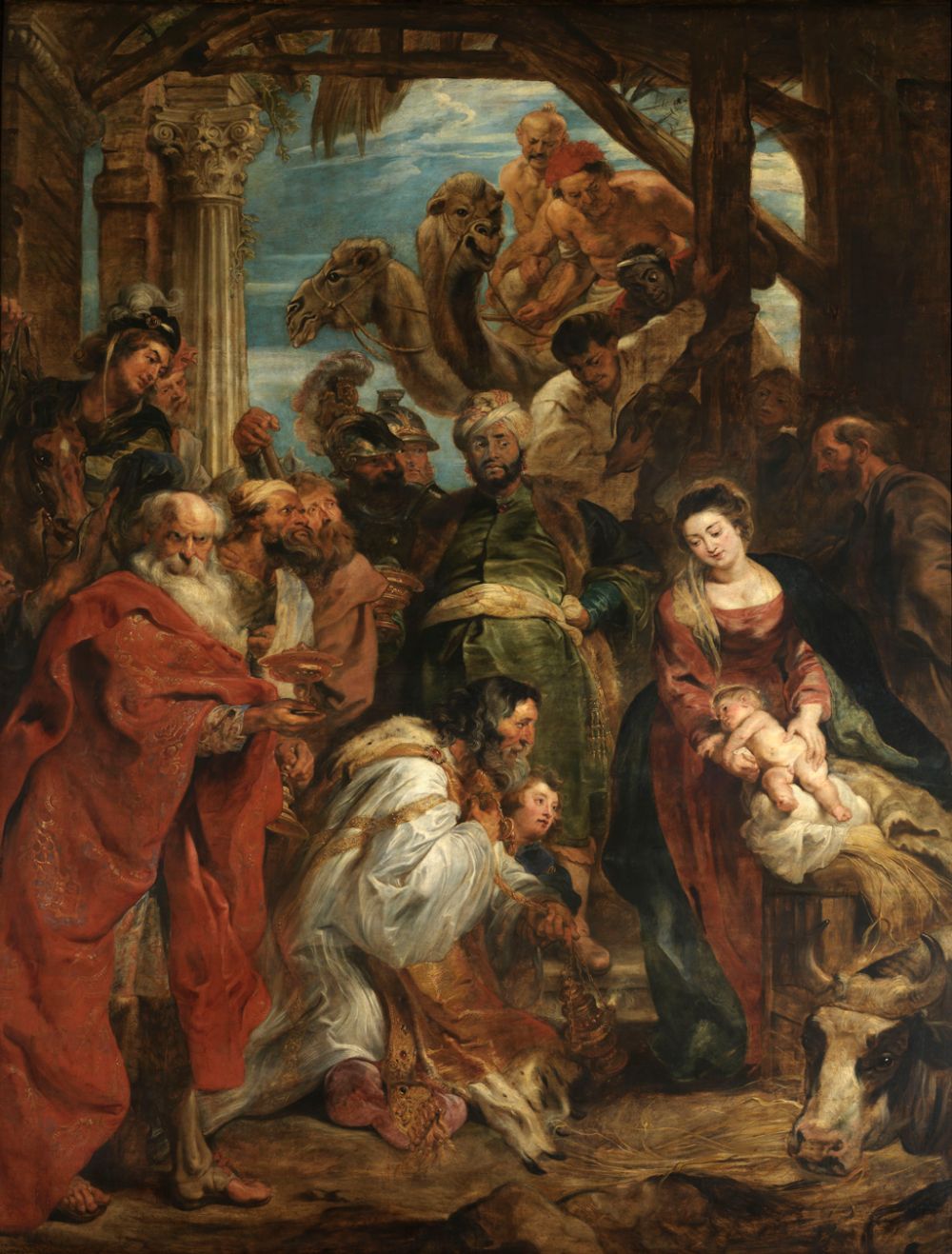
‘The Adoration of the Magi’ is a theme that Peter Paul Rubens painted remarkably often. The religious subject was popular in his time, and even before, not only among ecclesiastical patrons. Secular patrons, too, were eager to display an adoration. The Adoration of the Magi that now occupies a place of honor in the KMSKA was painted by Rubens around 1624 for the church of the now-vanished St. Michael’s Abbey in Antwerp.
Opera in paint
As an efficient artist, Rubens reused elements from his various Adorations: think of garments, certain heads, and the poses of figures. His variations on the theme above all demonstrate the painter’s creative versatility. Rubens plays with light, color, composition, and poses. Each Adoration is different.
What almost all Rubens variants have in common is that they are densely populated, with an accumulation of figures. At the same time, the Adoration of the Magi in the KMSKA is a well-balanced ‘opera in paint’. As a director, Rubens works with different layers: from the surly king and the ox in the foreground to the swirl of figures high in the background. Diagonals determine the composition and create balance. Contrasts generate a dynamic interplay between serenity and bustle, human and animal, wealth and simplicity, symbolism and earthliness.
‘Royal’ visit
And all this, while the evangelist Matthew recounts this biblical scene with relatively few details—indeed, he is the only one to do so. Wise men from the East follow a star and thus arrive at the newborn Christ child. That there were three of them was later inferred from the gifts they presented to Jesus: gold, frankincense, and myrrh. Although Matthew appears to attach little importance to this episode in Jesus’s life, his text later sparked the imagination of early Church Fathers, scholars… and artists. They filled in the gaps of the story, in word and image. Thus, the wise men became ‘kings’ representing the continents known at the time. They were given names. Mary’s role, too, evolved over time.
Rubens could therefore draw on a wealth of figures and other narrative elements that had been added to this story over the centuries. Even camels are part of it, as are the spider—read: the devil—in its broken web and the misplaced column in the stable. Just as folk tales transform into myths, live on in fairy tales and films, and become a shared cultural heritage, so too the ‘royal’ visit to the extraordinary baby forms part of an age-old, collective story. Even if today we sometimes know it only from the life-sized Nativity scenes in local markets during the Christmas season.


