Grand art in the heart of the museum

The Rubens and Van Dyck Halls were built to impress. Everything in these halls is extra-large, even for a museum building where several other rooms were also designed on a grand scale. Think of the marble staircase hall with its 39 paintings by Nicaise De Keyser, or the Green Galleries once intended for works by the academic artists’ corps. And yet, when we talk about the grandeur of our museum building, it is especially the Rubens and the smaller Van Dyck Halls that truly embody that word: grandeur. But why is that?
Impressing in five steps
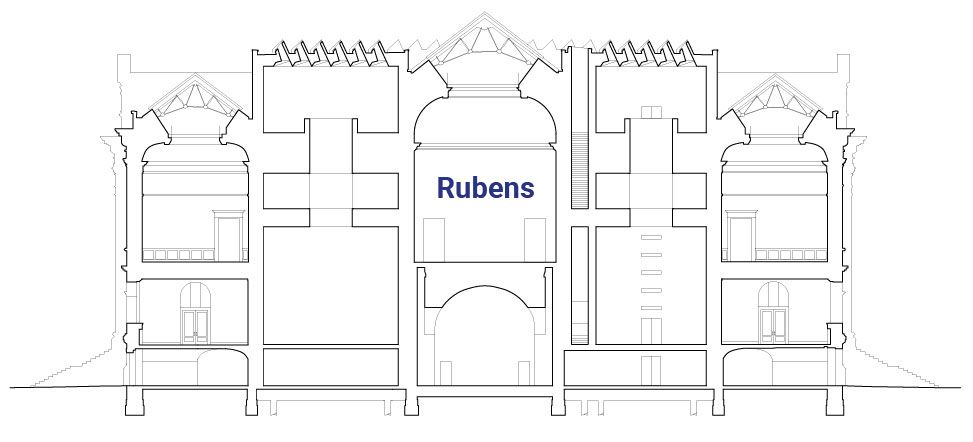
It’s in the scale. The Rubens Hall measures 29 meters long, 12 meters wide, and 15 meters high. The width and height of the adjoining Van Dyck Hall are, of course, the same, but its length is just over half that of the Rubens Hall.
It’s in the finishing. While the original architects deliberately chose a fairly sober finish for most museum halls, they went all out in the Rubens and Van Dyck Halls. Full oak paneling can still be seen in the other historic halls, but elaborately decorated cornices in relief with gilding are not.
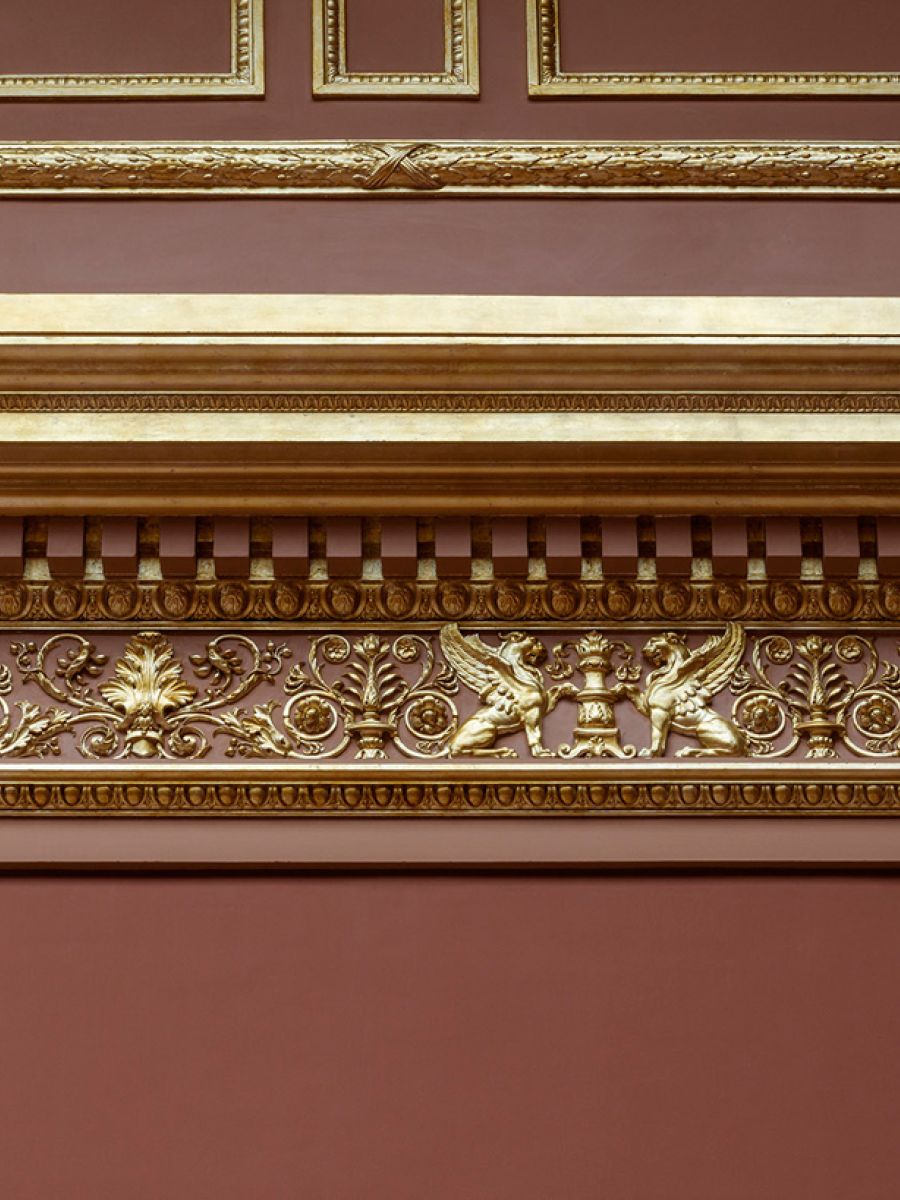
Finishing with “gold,” or rather aluminum leaf and colored varnish. - Photo: Karin Borghouts
It’s in their location. The halls form the beating heart of the museum. They are situated at the very center of the building, aligned along all axes—both for visitors inside the museum and on floor plans and cross-sections. Other rooms can be skipped; the Rubens and Van Dyck Halls serve as the starting and/or ending point of every visit to the historic upper-level galleries—even if you don’t enter them.
It’s in the displayed collection. Here, we show large altarpieces, primarily by Rubens, Van Dyck, and Jordaens—the golden boys of Antwerp Baroque. Considering that Rubens’ The Adoration of the Magi is 4.5 meters tall, it’s clear that this work cannot fit just anywhere.
It’s in the emotion. When the museum was built, Rubens, Van Dyck, and Jordaens were the great painter-heroes that young Belgium—and Antwerp in particular—loved to showcase. A strong sense of national and Antwerp pride is woven into the design of the halls. We may not feel exactly the same emotions today, yet the interplay of architecture, finishing, and collection pieces creates a very specific atmosphere found nowhere else in the museum.
Back to the origins
KAAN Architecten decisively chose, for the 19th-century halls, to restore that sense of grandeur. Thanks to the meticulous restoration of the parquet floors, woodwork, and cornices, the original finishes have been fully brought back. Add a carefully selected wall color to that—and, more recently, the artworks themselves. Our large altarpieces, however, cannot simply pass through a door. The Rubens Hall holds yet another special feature: shutters that connect the hall to the storage depot. An ingenious invention by the original architects Jean Jacob Winders and Frans Van Dijk, designed to safeguard the collection in case of emergencies—or major renovations—and… to return the works to the hall.

In 2013, we used the historic grooves to hoist the altarpieces into storage. In 2022, we performed the reverse operation. - Photo: Karin Borghouts

Photo: Wouter Bollaerts
Then and now
We talk about “returning,” but is that really the case? Will visitors recognize the halls and the artworks? Yes and no. As mentioned, the altarpieces by Rubens, Jordaens, and Van Dyck cannot simply be hung elsewhere in the museum. Moreover, we like to honor the intentions of the original architects. There are, however, some differences compared to the period before the museum closed in 2011. For example, our crown jewel by Rubens, The Adoration of the Magi, has changed location. The Magi are now immediately visible as you enter the hall, occupying the central place of honor.

The Adoration of the Magi, from the side wall…

… to the place of honor. - Photos: KMSKA Archive and Karin Borghouts
The artworks are now hung higher than before. Where they once just rose above the paneling, they are now positioned higher—similar to their placement above altars in churches. This improves the sightlines, and with the new individual lighting for each artwork, we can also better highlight the special details of each piece.
Fewer works are displayed. We no longer show all the different variations on a single theme; instead, we choose the single most representative masterpiece. Some works that previously hung in the Rubens Hall, such as Venus frigida, have been relocated. Venus frigida is not an altarpiece and fits better in the Lessons of Life Hall. This way, the focus in the Rubens and Van Dyck Halls remains clear.
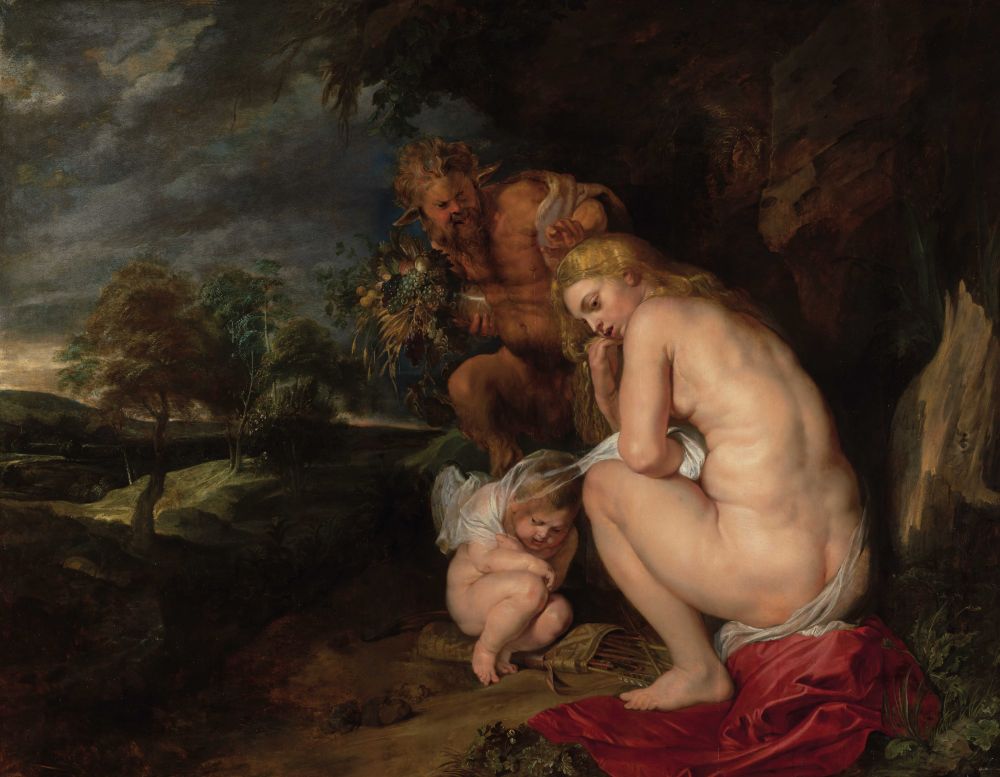
With its mythological theme, Rubens’ Venus frigida fits better in the Lessons of Life Hall than among the altarpieces.
And there’s a name change. We have renamed the Van Dyck Hall to the Saints Hall. It is, fittingly, filled with… saints.
Altarpieces in a museum?
It all seems obvious. Architects Winders and Van Dijk designed two halls to display altarpieces under the best possible conditions. KAAN Architecten has had the halls restored to honor the intentions of the original architects. But… altarpieces in a museum? Where do these works actually come from, and how did they end up with us?
Round trip to Paris and back
With the French victory at the Battle of Fleurus in 1794, the Southern Netherlands—including Antwerp—became part of France. While leader Napoleon was not a great fan of churches and monasteries, he did appreciate their artistic treasures. He ordered the religious buildings closed and transported the altarpieces to Paris. In many churches, wealthy citizens and guilds also owned an altarpiece or artwork in a funerary chapel. Regardless of the patron, all these works were placed in the new Musée Central des Arts that Napoleon established in the Louvre. Napoleon’s empire, however, was short-lived, and by 1815 his reign was over. This meant that the stolen works could finally return!
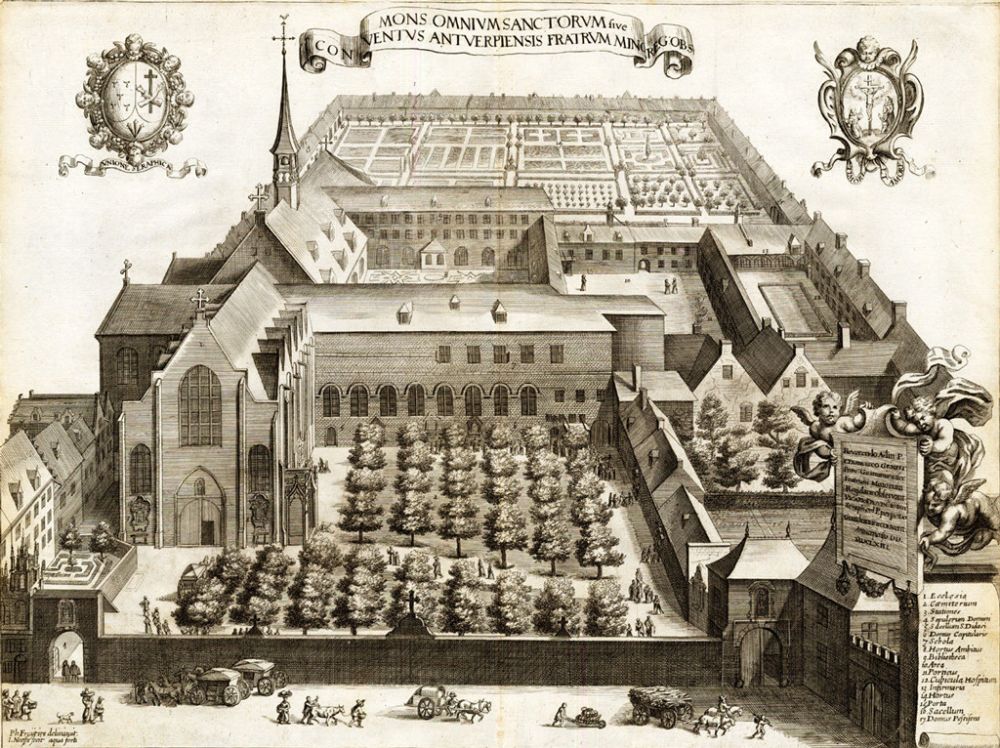
The abolished Minorite Friars’ convent became the home of the Antwerp Academy and its associated museum, along with the looted altarpieces.
The nearly 50 looted artworks returned to Antwerp that same year, where they were celebrated with great fanfare. The works were first housed in the Academy Museum, which Napoleon had established in 1810 in the abolished Minorite Friars’ convent on Mutsaardstraat. Here, the public could come and view them. Whenever possible, the pieces were then returned to their original churches, such as the Cathedral. Twenty-seven works remained in the Academy Museum, as their original homes had disappeared.
A new museum following the latest trends
From then on, the Academy and the city regularly renovated and refurbished the museum. All these interventions could not hide the fact that the Academy Museum was too small and not secure enough to continue housing all these artistic treasures. The city decided, with support from the state, to build a new museum.
When architects Jean Jacob Winders and Frans Van Dijk were officially commissioned in 1882 to design a new museum together, they did not take the task lightly. To fully immerse themselves in the art of museum building, they visited several European museums—whether newly built or still under construction, it made little difference. The two architects traveled to Berlin, Dresden, Frankfurt, Munich, Kassel, and Vienna. In Amsterdam, they were given a guided tour of the Rijksmuseum construction site by the architect himself, Pierre Cuypers.
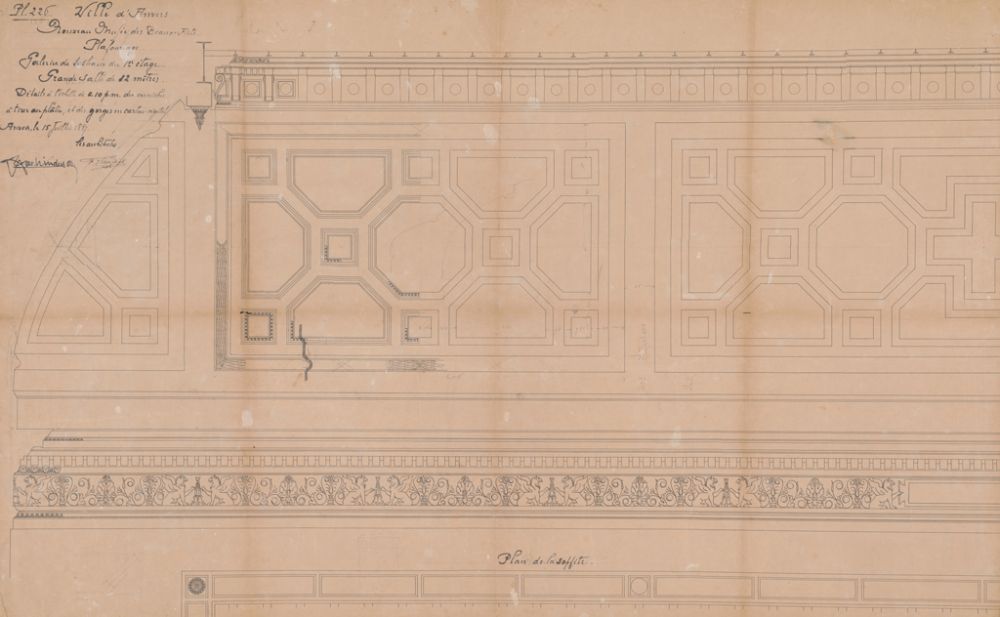
Design for the cornices of the KMSKA, inspired by visits to European museums. - KMSKA Archive
Winders and Van Dijk compare gallery colours, spatial proportions, heating systems and the incidence of light in the foreign museums. Based on their findings, they adjust their own plans slightly. What the architects are absolutely convinced of is that the museum must be a Gesamtkunstwerk, a harmonious interplay of all the arts. Sculptures will adorn the façade, and inside, the interior and the artworks must form a single unified whole. And where is that more the case than in the Rubens Hall than in the Saints Hall?
Restoration in the gallery
Some smaller altarpieces, such as the so‑called Rockox Triptych, were already restored in the conservation studio. The large altarpieces, however, remained in the museum’s storage. We could not move them, and therefore could not restore them where needed. We will do so in the future, and in the galleries themselves. The story of the Rubens Hall and the Saints Hall is therefore not fully written yet…


