Three new
insights into the collection

1. Festival of the Archers refers to Antwerp guild halls
Koen Bulckens: 'Festival of the Archers by Meester Van Frankfurt is one of the most enigmatic paintings at KMSKA.'
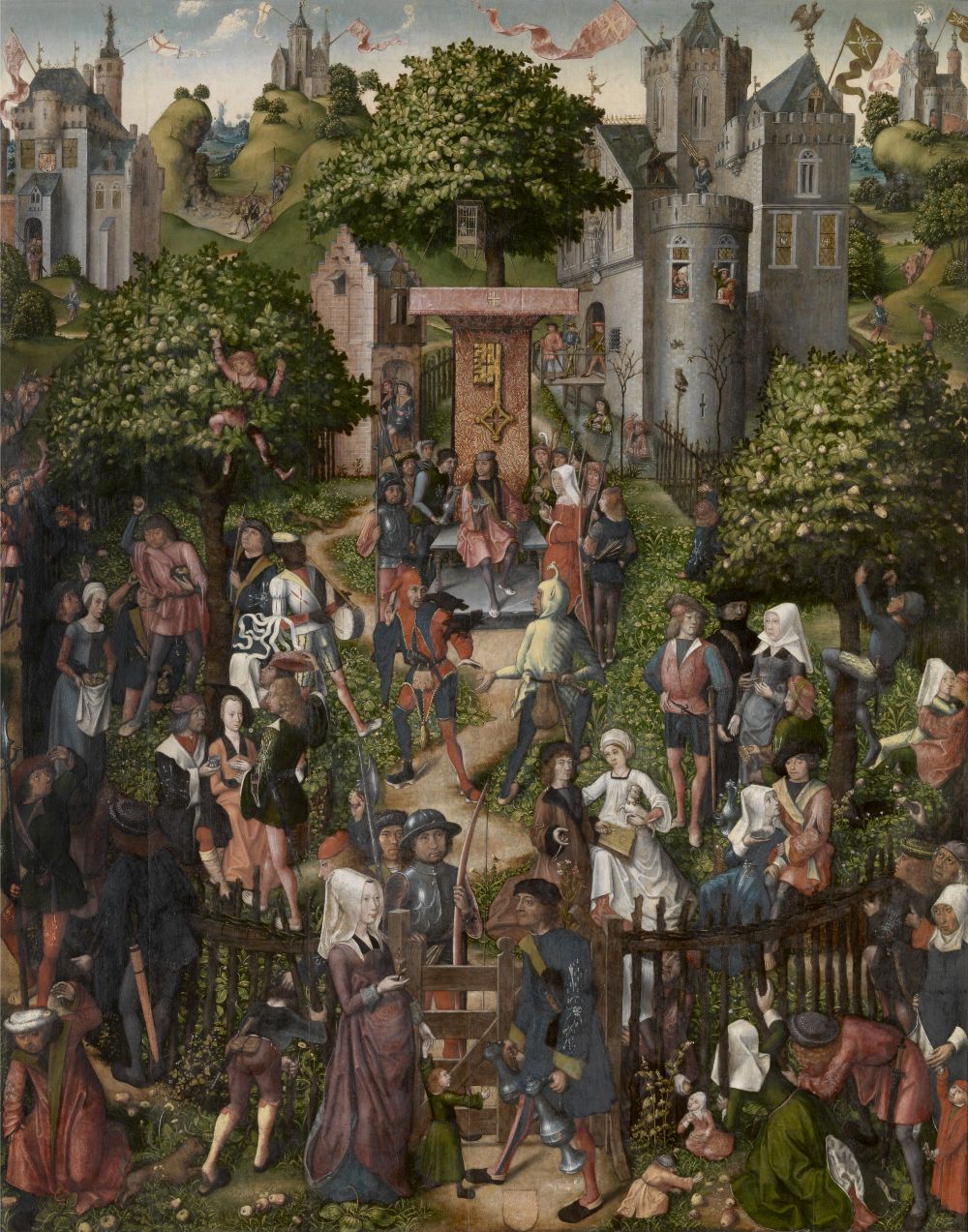
'Art historians have spent generations deciphering the many, sometimes bizarre details. It has now come to light that the symbols on the fortresses in the background refer to the guild halls of the archers in Antwerp’s city centre.'

The coat of arms represents the “Pand van Spangien” (Grote Markt 7), the guild hall of the Old Crossbow Guild.

The moon refers to “de Half Maene” (Gildekamerstraat 6), the guild hall of the Young Crossbow Guild.

The falcon symbolizes “Valckenborch” (Gildekamerstraat 3), the guild hall of the Old Longbow Guild.

The earliest meeting place of the Young Longbow Guild is not documented, but the painting points to “de Swaen” (Gildekamerstraat 7).
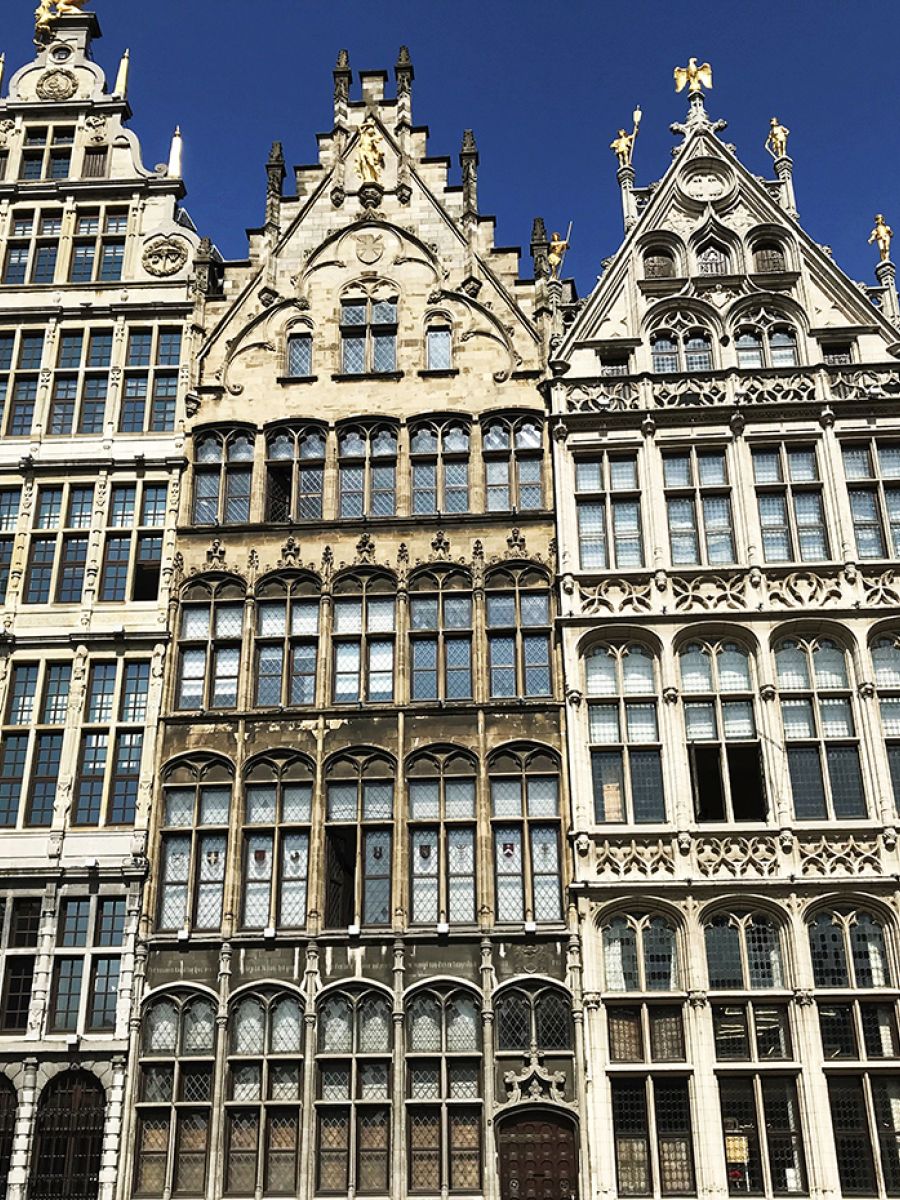
You can admire a reconstruction of a later version of the guild halls at the Grote Markt.
Today
2. The signature of George Grosz
Siska Beele: 'The portrait of Walter Mehring by George Grosz was purchased by the museum in 1939 at the infamous Entartete Kunst auction in Lucerne. The museum was very pleased with the Mehring portrait, but strangely, the painting was not closely examined or documented upon arrival. It ended up in the inventory catalog without a signature and without a date.'
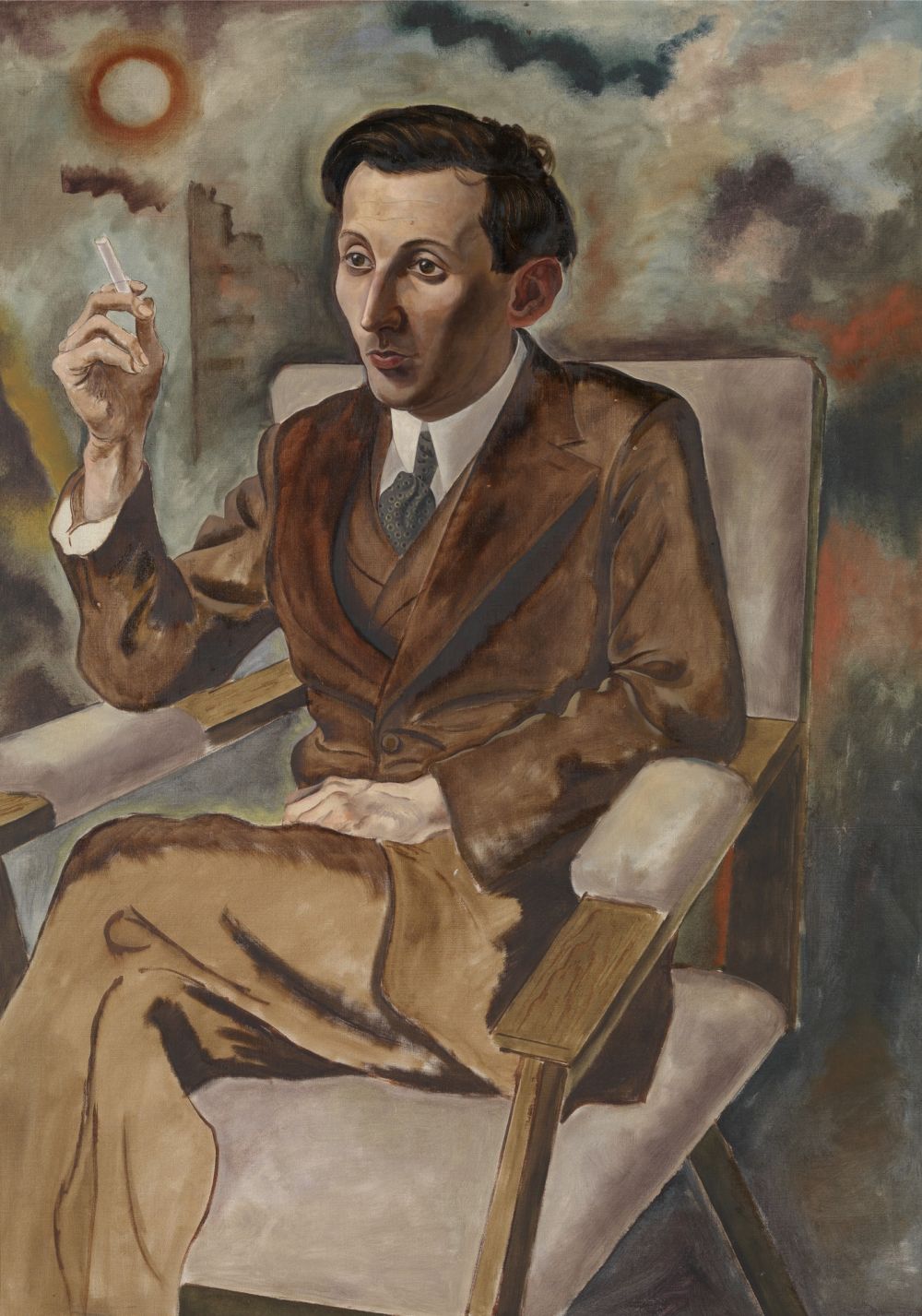
The Writer Walter Mehring - George Grosz, KMSKA
'While preparing an article about the portrait for the summer issue of Zaal Z, I consulted the Lucerne auction catalog, and there I finally found evidence that the portrait was indeed signed and dated. The signature and date were supposed to be on the back of the canvas. I immediately asked the restorers to remove the backing, and there, at the top center, appeared “Grosz April 1926” in the artist’s elegant handwriting.'

Grosz placed his signature and the date on the back of the painting.

back side
3. The dating of Speed by Jules Schmalzigaug
Gonnissen: 'The Belgian futurist Jules Schmalzigaug exhibited in April and May 1914 during an important Futurist exhibition in Rome. Among other works, he presented the first abstract painting in Belgian art history. There, he met Giacomo Balla, one of the leaders of the Futurist movement. They shared a passion for abstract whirls of lines and shapes, as well as the use of pure color.'
'I believe Speed must have been created between April and December 1914, after the opening of the exhibition in Rome and before the war, which forced Schmalzigaug to move to The Hague.'
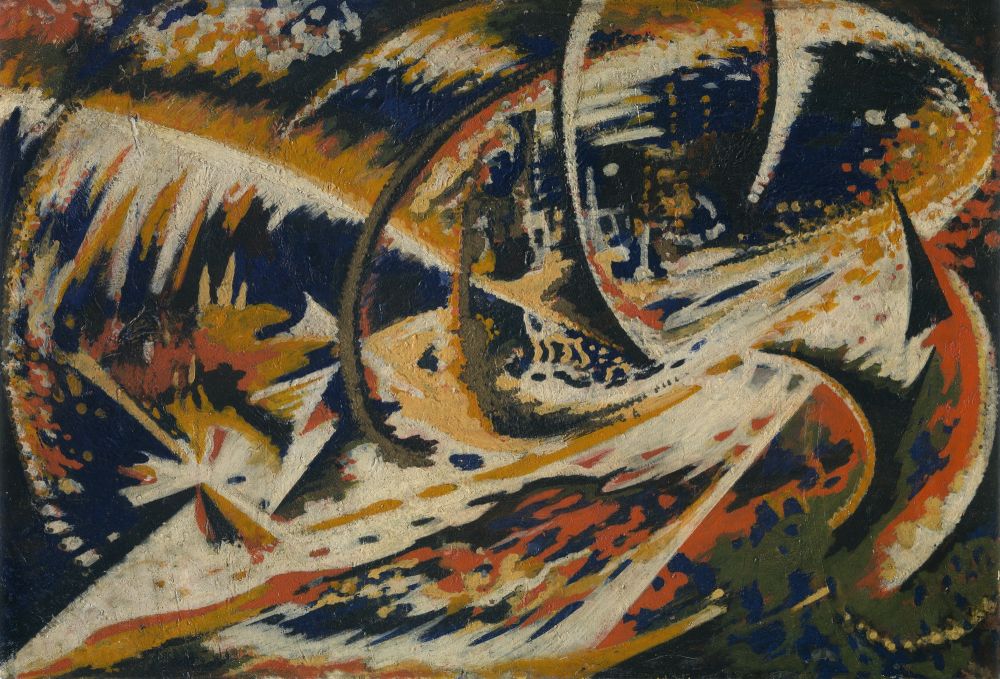
Speed - Jules Schmalzigaug, KMSKA


