Lantis is building in Antwerp, with the KMSKA as its cultural partner

Lantis, the public company responsible for mobility projects of regional importance in the Antwerp area, sees many parallels between itself and the KMSKA. An alliance was therefore a natural choice, say CEO Luc Hellemans and Director of Environment Bart Van Camp.
Why do you consider it important to engage in this kind of partnership?
Luc Hellemans: “Our shareholder is society. We do everything with the aim of improving the quality of life for and with the people of Antwerp, Flanders, and Belgium. We can only achieve this by creating alliances. This is how the best ideas reach us and allow us to continually improve.”
Bart Van Camp: “We want to embed ourselves in the minds of the people of Antwerp and connect with all visitors to the city. You do this by creating new social connections, which makes people see you in a different way, and by showing that you are more than just a construction project. Also, by forming partnerships that place the challenges we face in a broader perspective. It’s always about creating a better city together: through improved mobility, but also by bringing art and culture to the heart of the city.”
Why did you choose KMSKA?
Bart Van Camp: “The Oosterweel project is closely linked to the Antwerp psyche, so we need to associate ourselves with some of the city’s icons. The KMSKA has helped write Antwerp’s story: you can tell the city’s history through the museum. It builds on a rich tradition while looking toward the future. That resonates with us: we also want to help shape that future in the city. A no-brainer, really.”
Luc Hellemans: “I see many parallels. The museum has transformed something old into something new. We are renewing a structure from the 1960s, on an old ring of fortifications. The museum is an accelerator for new trends and a point of anchorage. It aims for the stars to ultimately land on the moon. There were doubts along the way, just like in our story. But through a sustained vision for the future and ambition, the dream was realized. That cathedral-like thinking may be very un-Flemish, but it gives a lot of hope for the future.”
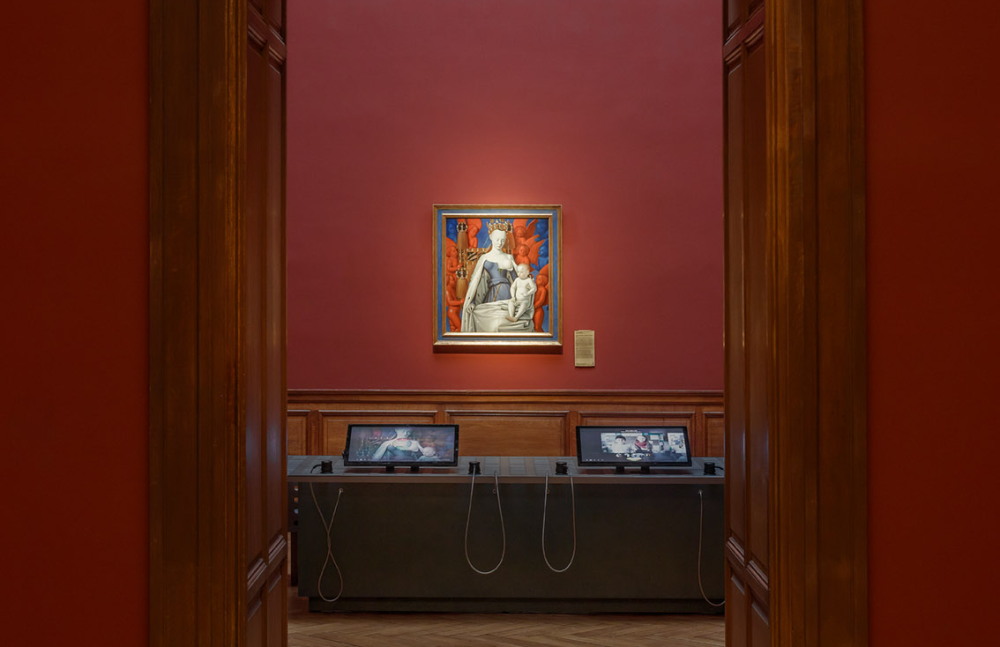
What is your favourite work from the collection?
Luc Hellemans: “The ‘Madonna Surrounded by Seraphim’ by Jean Fouquet. When I first saw his works, I thought they had been painted in the 19th or 20th century, not the mid-15th century. I find his modernism and bold subversion of the beauty ideals of his time both remarkable and intriguing.”
Bart Van Camp: “The Salon, with its cabinet structure, its taste for Orientalism, and its beautiful works, appeals to me greatly. But for me, the entire building and its setting are what matter. They remind me of my last visit with my father in the year of the closure, 2006. He was terminally ill and in a wheelchair, and the building wasn’t designed for that. When I recently stepped inside again for the first time, I was blown away: the renovation, the combination of old and new, the staging, and the building with all the artworks inside. Wow! For me, the museum itself is the artwork. It reads like a book and tells the story of humanity, from an Antwerp perspective, so to speak (laughs).”
What is your company most looking forward to during this partnership?
Bart Van Camp: “I hope that within the setting of the KMSKA, we can overcome barriers. And that we can engage in dialogue with our stakeholders and non-obvious partners about the dreams we have and want to realize. Replanting sometimes brings surprising insights. Rubens was a painter, but also a businessman and a diplomat. Hopefully, his art and spirit will inspire us to look beyond walls and find answers together.”
Luc Hellemans: “We hope to be inspired by the surroundings and by the people who work in the museum. And dreams? We hold many information sessions and build infrastructure that isn’t always used. Why don’t we organize an exhibition together in a park & ride? Or why couldn’t the museum be present with art and some Artists in Residence during an information meeting on Ring Days? During an Open Construction Site Day, we see 9,000 people in a single day. And in the KMSKA storage, there are still 2,500 works. I’m just throwing out ideas, you know (laughs).”
Bart Van Camp: “I would also love for the KMSKA work depicting the iconic 16th-century Oosterweel Church to be hung in that church again. Soon, this sole witness of the vanished polder village of Oosterweel will become our meeting center and the setting where our experts will occasionally give presentations. Admit it: that would be wonderful, wouldn’t it?”


