The Copper Sulfates of Massijs

In the museum magazine ZAAL Z, we take a look both in front of and behind the scenes of museum work. Topics range from the latest exhibition to the most recent restoration projects. This episode focuses on the restoration of a work by Quinten Massijs. Want to read all the interesting and complete articles about the museum? Subscribe to ZAAL Z at the bottom of this page!
By Gwen Borms
Since January 2023, the KMSKA has had a new “attraction”: the restoration of the famous panel The Lamentation of Christ by Quinten Massijs. This is the central panel of the so-called Altarpiece of the Carpenters’ Guild. The front sides of the side panels had already been restored, while the back sides are still being conserved with minimal intervention. You can follow the process through a glass wall in the restoration studio. Currently, the focus is on the technical-material analysis of the work, with the help of external partners. One of the researchers is Nina Deleu, a PhD student and graduate of the Conservation & Restoration Master’s program at University of Antwerp. During her studies, Nina completed an internship in the KMSKA restoration studio. Afterwards, she worked on a significant part of the museum’s terracotta collection. For her PhD with the research groups ARCHES and AXIS, she is now collaborating again with KMSKA (as well as with other Flemish museums).
The subject of Nina’s study: green copper pigments, more specifically copper sulfates, used in Flemish Renaissance art, including by… Quinten Massijs.
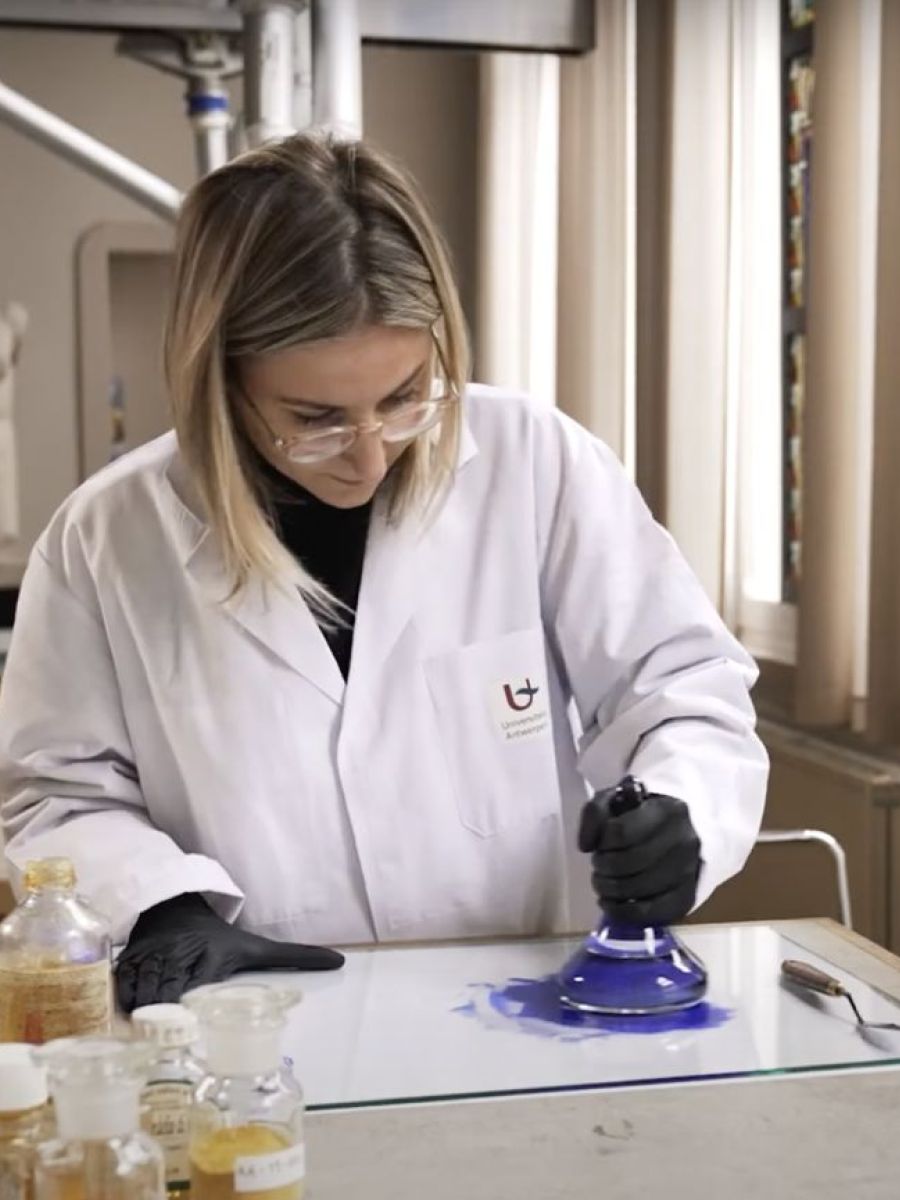
Nina Deleu is researching the composition of color pigments.
Why this topic?
"These pigments have only been discovered recently. This is because we now have advanced techniques to distinguish them from other copper-based pigments. In the past, when copper was identified in green paint, it was quickly assumed to be one of the well-known copper greens: verdigris or malachite. But new techniques now show that a wider variety of copper pigments were used, including these copper sulfates."
"We first encountered them during the restoration project of the Ghent Altarpiece by the Van Eyck brothers, which has been ongoing since 2012. Previously unknown copper sulfates were found in overpaints and retouches from around 1550. However, they were not present in the original 15th-century paint layers or in later interventions. The discovery of these pigments in a masterpiece like the Ghent Altarpiece prompted further study."
How do you start such a study, and what exactly do you do?
“The problem was that we were finding more and more of these pigments, but we knew almost nothing about them. It remained a mystery. With my PhD, I’m trying to gain a better understanding of both the use of the pigments and their production and trade.”
“It’s a very interdisciplinary research project! Sometimes you analyze a beautiful painting to understand how the pigments were used. At other times, you study centuries-old recipe books to discover how the pigments were made. Or you investigate important trade routes for copper pigments in the archives. I find all these different aspects incredibly fascinating.”
These copper-based pigments were mainly used in the first half of the 16th century in the Netherlands, particularly in and around Antwerp.
Why specifically Flemish Renaissance art?
“What makes these pigments so interesting is that they were used during a specific period and in a specific place. Many other pigments were part of painters’ palettes for centuries. These ones were not: they were mainly used in the first half of the 16th century in the Netherlands, particularly in and around Antwerp. That’s why we focus on Flemish Renaissance art.”
“Antwerp was one of the most important trade centers in the 16th century. It’s therefore not surprising that new artist materials were available there. This is also linked to the rise of landscape painting during this period: painters were looking for new pigments to expand the limited range of green tones. And the bluish undertone of these specific green pigments made them particularly suitable for painting the backgrounds of so-called ‘world landscapes.’”
How does the project with Quinten Massijs fit into your research?
“To better understand the use of these pigments, we study a large number of Flemish Renaissance paintings. We analyze the green paint to determine which copper sulfates were used, by which artists, on what scale, for which shades of green, in combination with which other pigments, and so on.”
“Quinten Massijs is one of the most important Antwerp artists of the first half of the 16th century. He fits perfectly within the framework of this research. We have already found copper sulfates in his work, both in the landscape in the background and in the green clothing of the figures in the foreground of the Altarpiece of the Carpenters’ Guild.”
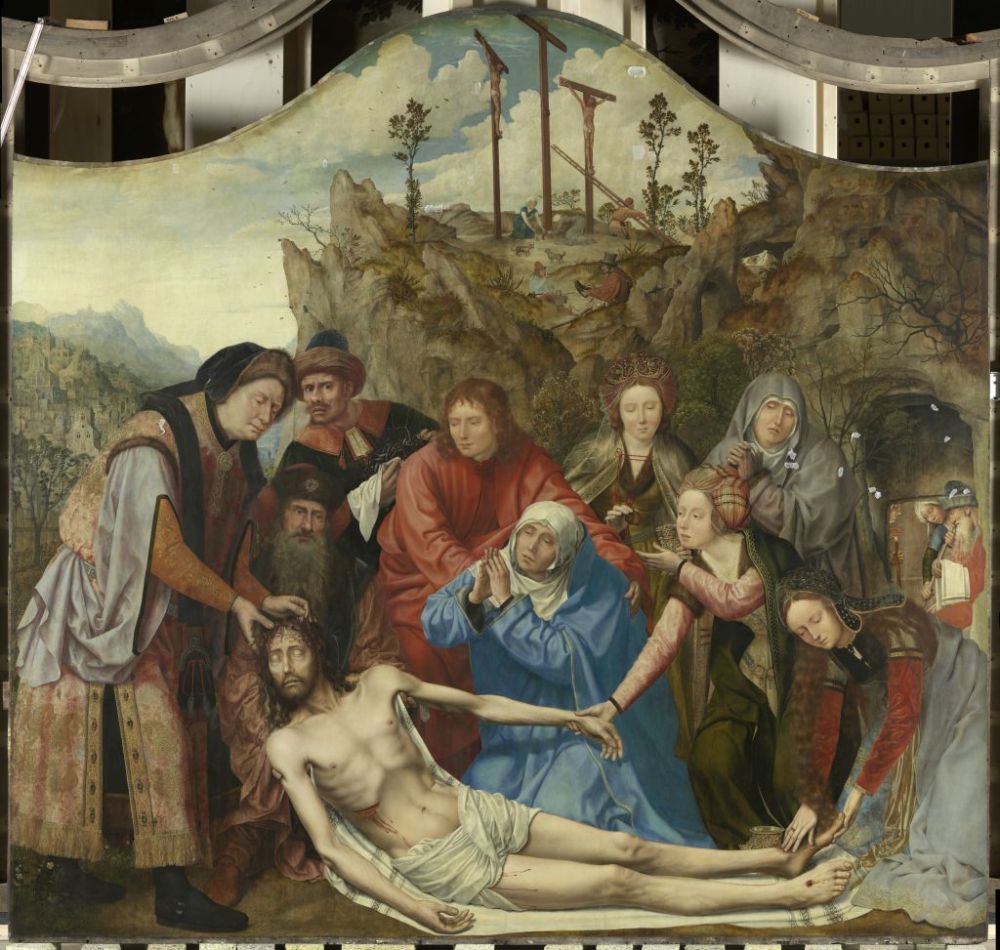
The Lamentation of Christ - Quinten Massijs,, KMSKA
What are the first results?
“Copper sulfates were long considered rare and rather unusual. In the meantime, we know that many Southern Netherlandish artists used them in the 16th century. They were a regular part of their palette. And these were prominent painters, such as Quinten Massijs, Frans Floris, and Joachim Patinir. This suggests that these pigments were important. We also now have a better understanding of how they were used, for example in the layering of the paint.”
“This type of research teaches us more about the working methods of Flemish Renaissance artists. Once you know how their materials were made, what properties they have, and how they change over time, that knowledge becomes relevant for the conservation and restoration of these paintings. Conservation involves minimal intervention to prevent further damage, such as stabilizing loose paint. Restoration is a more extensive treatment aimed at returning the work as closely as possible to its original state, for example by removing varnish layers.”


